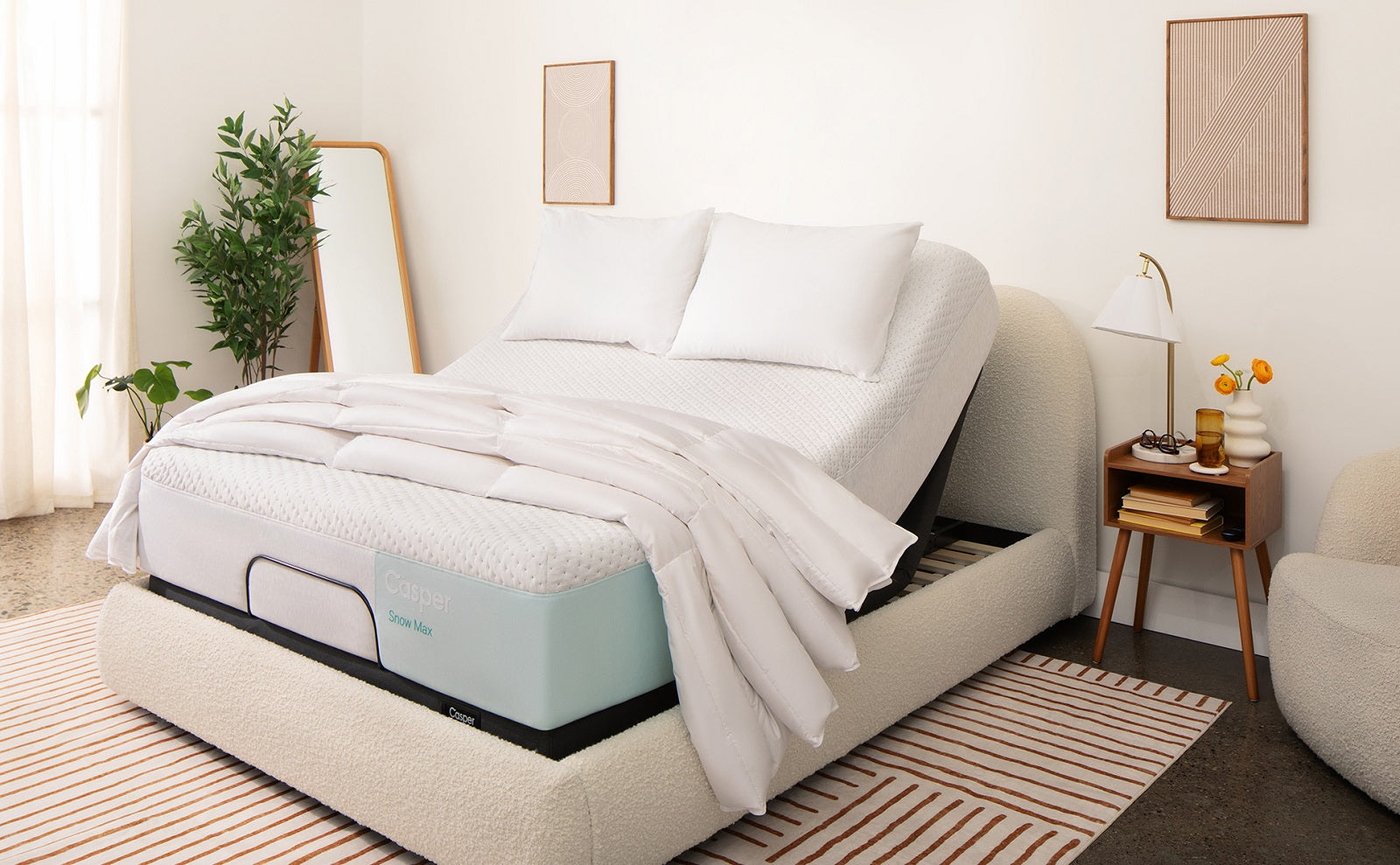


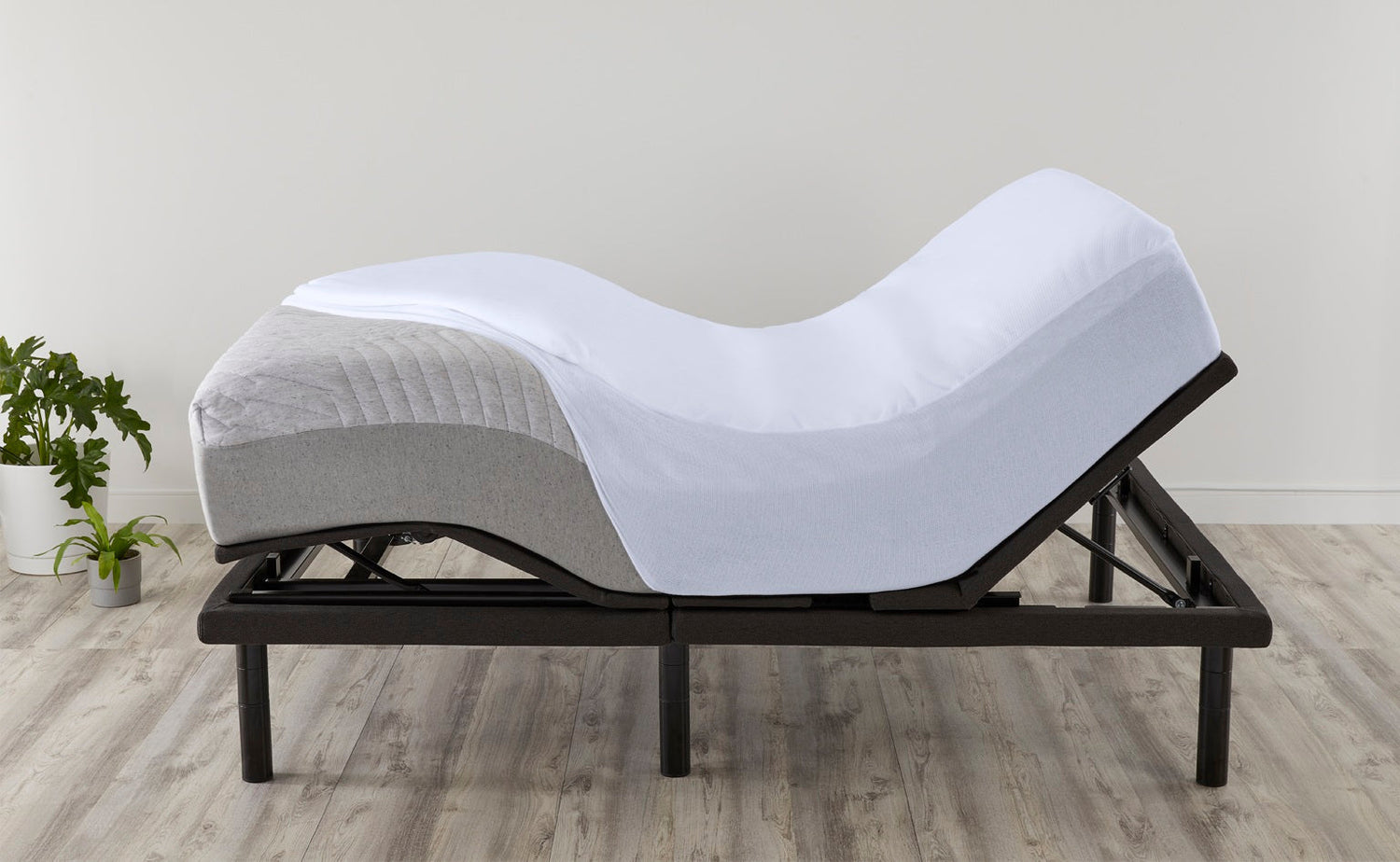


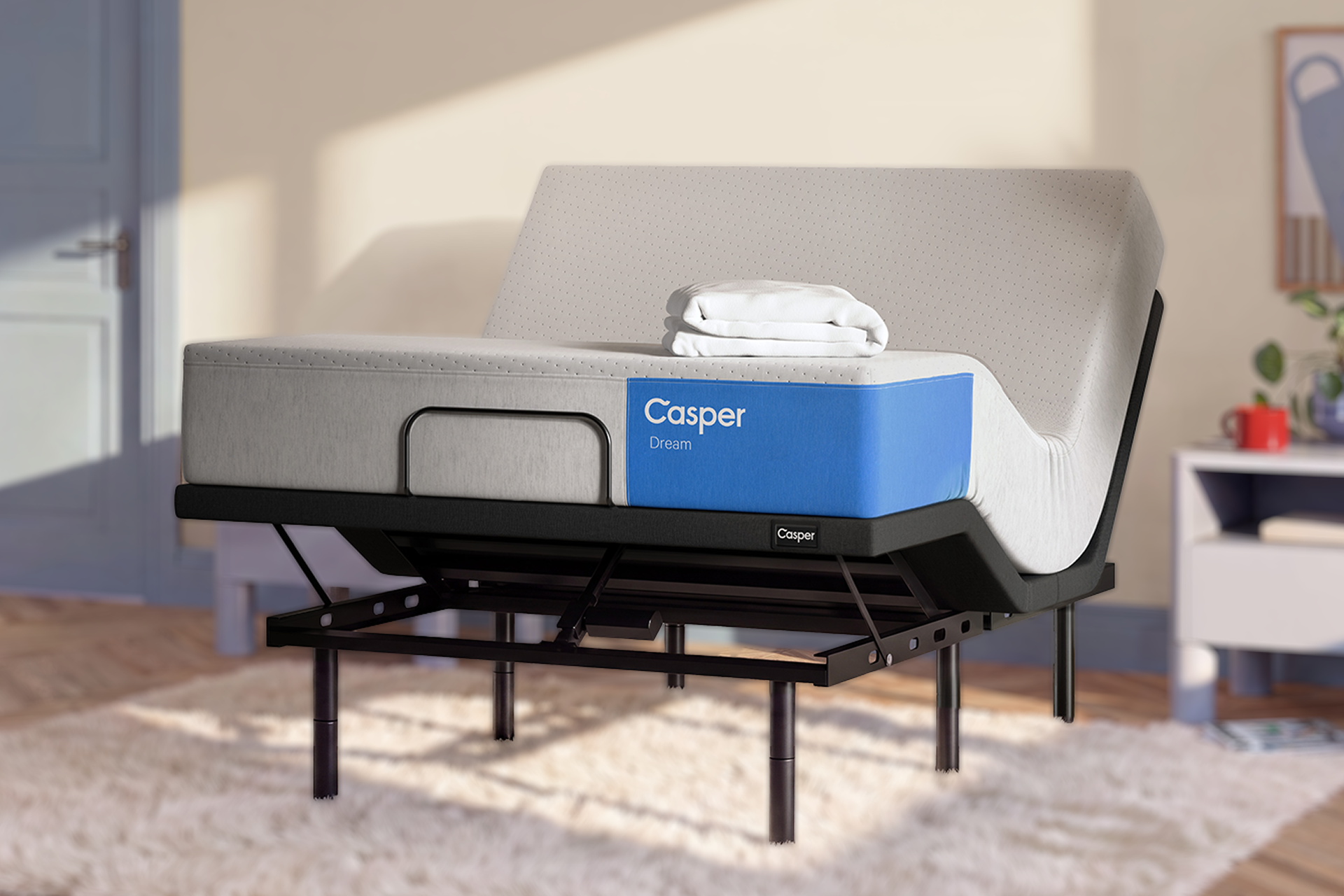




Adjustable beds aren’t just for late-night reading or movie marathons (although they’re excellent for both). These beds are actually designed to help you personalize your sleep comfort with settings for head up, feet up, zero-gravity, and more.
Even better? Adjustable beds come in all the standard mattress sizes.
This guide breaks down adjustable bed sizes, room fit, and everything else you need to know to choose the right setup for your space.

Adjustable Bed Size Chart
To start, let’s take a quick look at the most common adjustable bed dimensions. The footprint may shift slightly based on design or frame style, but standard measurements are:
|
Adjustable Bed Size |
Dimensions |
|
Twin |
38” x 75” |
|
Twin XL |
38” x 80” |
|
Full |
54” x 75” |
|
Queen |
60” x 80” |
|
King |
76” x 80” |
|
California King |
72” x 84” |
Use this chart as a starting point for room planning and base-to-mattress pairing.
Standard Adjustable Bed Sizes
Here’s a more detailed look at the standard sizes of adjustable beds.
Twin
A twin adjustable bed (38” x 75”) works well for a single sleeper who wants comfort without claiming much floor space. It’s a popular choice for kids’ rooms, compact homes, and multipurpose guest rooms.
Twin XL
Twin XL (38” x 80”) brings five extra inches of legroom, making it ideal for tall sleepers who want adjustability without committing to a wider bed. Twin XL is also the building block for Split King setups.
Full
At 54” x 75”, full size adjustable beds offer more width than twin options. They’re great for solo sleepers who like to sprawl and couples who want a cozier layout in a smaller room.
Queen
Queen (60” x 80”) is the most widely chosen bed size for couples.1 It balances personal space with room fit, making it a go-to in apartments and primary bedrooms alike.
King
King adjustable beds measure 76” x 80”, giving two sleepers generous elbow room. If you love a wide, open sleep surface (or you share your bed with pets), a king is a reliable pick.
California King
A California King adjustable bed (72” x 84”) trades a few inches of width for extra length. Tall sleepers or anyone craving more legroom will appreciate the extended footprint.

Split Adjustable Beds
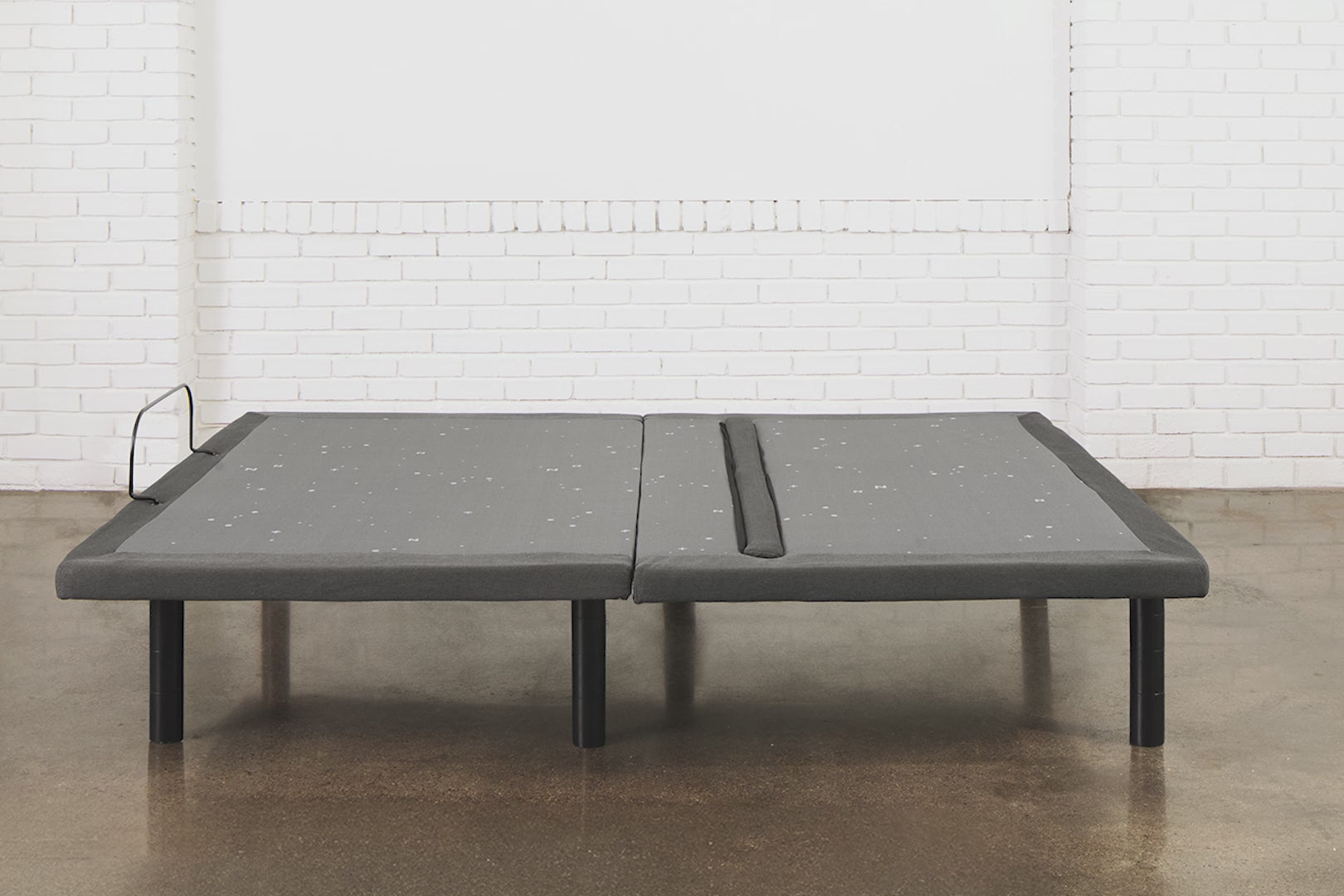
Split adjustable beds let each sleeper control their own head and foot angles while still sharing a single base footprint.
- Split King – A split king uses two twin XL sections combined to form a full king. Each partner gets independent adjustability, and the surface area remains exactly 76” x 80”.
- Split Queen – Split queen bases commonly use two 30” x 80” sections. The overall footprint stays 60” x 80” (the same as a standard queen), but both sleepers get individual controls.
- Split-Top (head-only split) – Split-top adjustable beds keep the lower half of the mattress unified while splitting only the head section. This style maintains a single mattress but allows each sleeper to choose their own upper-body angle. It’s often available in queen and king sizes.
If one person loves reading upright and the other prefers a flat, quiet cocoon, splits are a smart solution.
How to Choose the Right Size
Finding your perfect adjustable bed size isn’t just about measurements. You also want to consider factors like your sleep style and possible customization needs.2 Here’s how to narrow your options down, step by step:
- Measure your room – Start with the basics: A queen typically fits well in a room around 10’ x 10’. For a king or California king, aim for roughly 12’ x 12’. These sizes will give you enough room to walk around and place nightstands without bumping into walls.
- Decide who’s actually sleeping in the bed – If it’s just you, sizes like twin, twin XL, or full often work well. Couples tend to choose a queen or king, depending on how much shared space they want. If one person tends to sprawl or move more at night, the larger sizes provide a calmer, sleep-friendly setup.
- Check whether you need independent adjustability – If you and your partner have different sleep angles or bedtime routines, consider going split or split top. These setups allow each sleeper to control their own head and food positions without compromising shared space.
- Measure doorways, hallways, and stairs before delivery – Before committing to a size, map your delivery route by measuring door frames and tight corners. Many adjustable bases ship in sections, but knowing your clearances ahead of time can help ensure setup is smooth and stress-free.
Once you’ve checked these essentials, choosing the right adjustable bed size becomes a whole lot easier.

Key Features to Consider
The right size matters, but so do the features that help you use your adjustable bed every day.
Preset Positions
A few favorites here include zero-gravity for leg relief and anti-snore for open airways. These shortcuts make nightly adjustments almost effortless.
Leg Height Adjustability
Adjustable legs allow you to tailor your bed height. Whether you prefer a low, modern look or a taller setup with room for storage bins, height flexibility makes it easier to get the perfect fit.
Controls and Connectivity
Look for intuitive remotes, smartphone apps, and even voice control in some models. Backlit buttons are especially useful for late-night adjustments.
Weight Capacity and Build
Check the total weight capacity (including the mattress and sleepers). High-quality adjustable bases use sturdy steel frames and quieter motors to maintain stability and smooth motion.
Casper Adjustable Bed Frames and Mattresses
Casper adjustable bed frames come in every standard size (twin through California king, plus split options), making it easy to match your new bed to your space and sleep style.
Pair your base with a Casper foam or hybrid mattress designed to flex smoothly while delivering the contour and support you expect from Casper.
Together, the right adjustable bed sizes and mattress choice will help you achieve total bedroom comfort.
Sources:
- Gardner-White. What Size Bed Should I Get? A Comprehensive Guide. https://news.gardner-white.com/2024/02/what-bed-size-should-i-get/
- National Council on Aging. Mattress Sizes and Dimensions Guide: Choosing the Best Fit for Your Sleep Needs. https://www.ncoa.org/product-resources/sleep/mattress-sizes/