
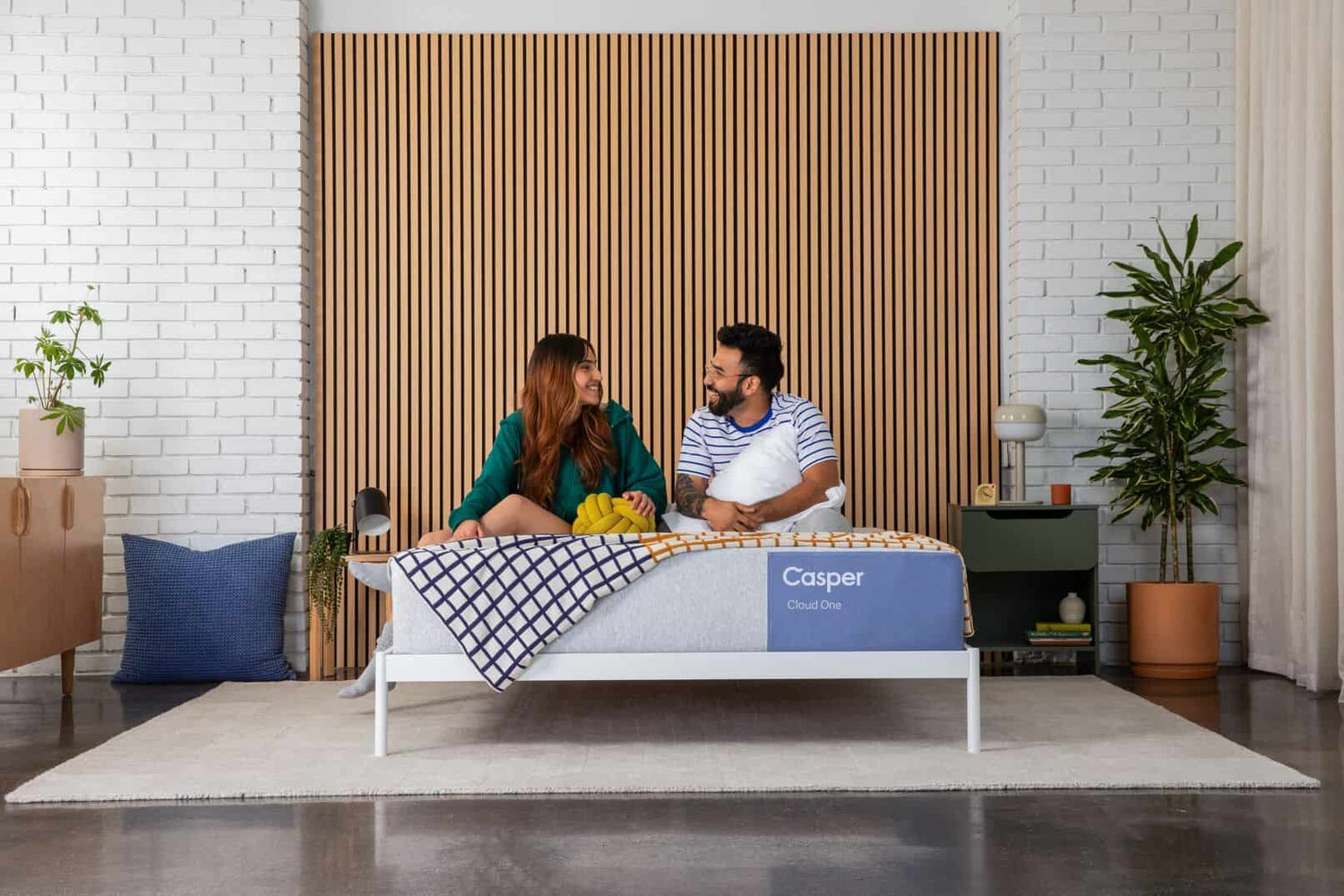





You finally agree on the same Netflix show. The restaurant. The vacation spot. But the mattress? That's where things get complicated.
Sharing a bed means sharing a sleep environment with someone who may run hot when you sleep cold, sprawl when you stay still, or crash at 9 PM while you're still wide awake at midnight. Two people, different bodies, different habits, one mattress. The good news: the right one exists. This guide breaks down exactly what to look for so both of you actually wake up rested.
Why Sharing a Bed Creates Unique Sleep Challenges
Solo sleepers have it easy. They pick the mattress firmness they like, buy the size that fits, and call it done. Couples don't get that luxury.
When two people share a mattress, the variables multiply fast. One partner shifts position and the whole bed moves. One runs warm and the other is already kicking off the covers. One needs a firm surface for their lower back; the other wants to sink into something soft. These aren't minor inconveniences. Disrupted sleep compounds night after night, and a mattress that works for one person but not the other isn't really working.
Common Sleep Challenges for Couples
- Motion transfer. When your partner tosses at 2 AM, you feel every bit of it on the wrong mattress.
- Firmness disagreements. One person's "perfect" is the other person's "how is this comfortable."
- Sleeping hot. Body heat builds up between two people. Mattresses that trap that heat make the whole night miserable.
- Edge instability. Weak edges mean less usable surface. When you're already sharing, losing several inches on each side adds up.
- Different schedules. Night owls climbing into bed shouldn't wake early risers. But they do, if the mattress lets them.
- Restlessness. Snoring, leg movement, frequent repositioning. Some mattresses amplify every bit of it.
How the Right Mattress Can Help
- Absorbs movement so one partner's restlessness stays on their side of the bed.
- Provides balanced support so different body types can both sleep comfortably.
- Pulls heat away from the surface instead of trapping it.
- Holds its shape and firmness all the way to the edge, giving both sleepers the full width.
- Supports deep, uninterrupted sleep. The kind that actually makes tomorrow feel manageable.

What to Look for in a Mattress for Couples
Not all mattress features matter equally when you're buying for two. These are the ones worth paying attention to.
Motion Isolation
Motion isolation describes how well a mattress absorbs movement rather than sending it across the surface. Memory foam is the gold standard here. It absorbs energy at the point of contact, so a partner getting up at 5 AM for an early flight doesn't turn into a whole-bed event. Hybrid mattresses with individually wrapped coils also perform well. Traditional innerspring coils are connected, so movement travels more freely. Less ideal if either of you is a restless sleeper. Learn more about hybrid vs innerspring mattresses in our blog.
Firmness and Shared Comfort
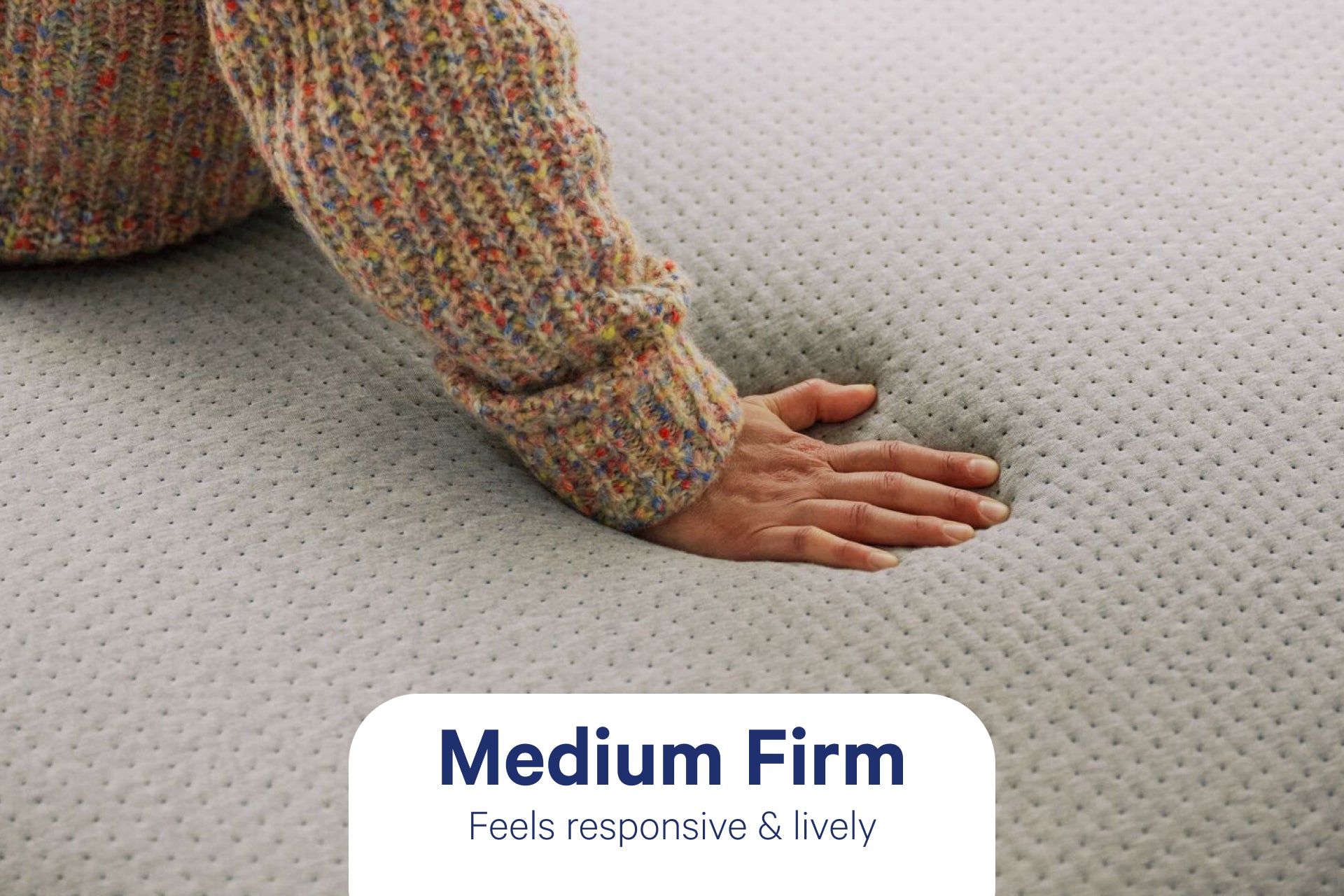
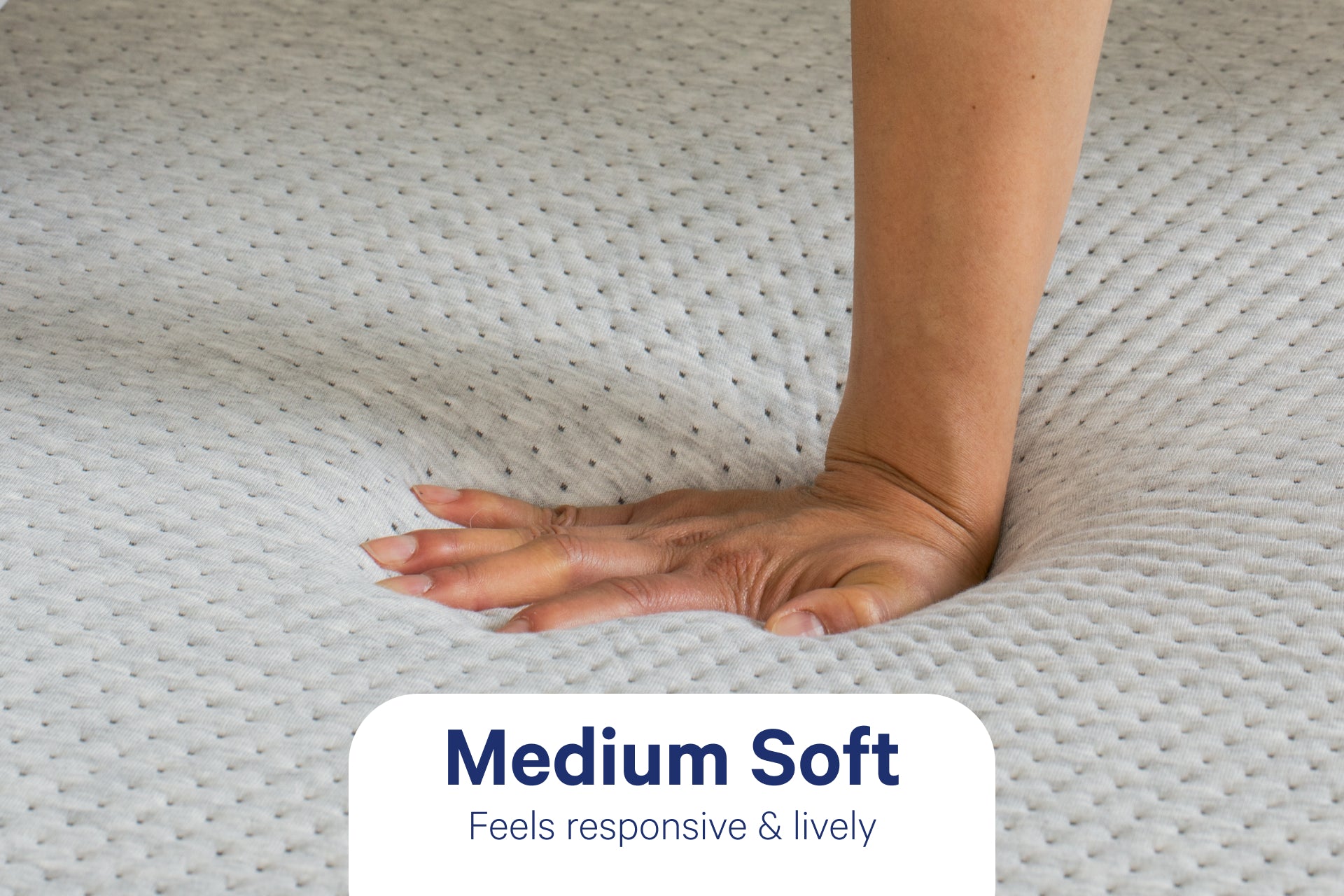
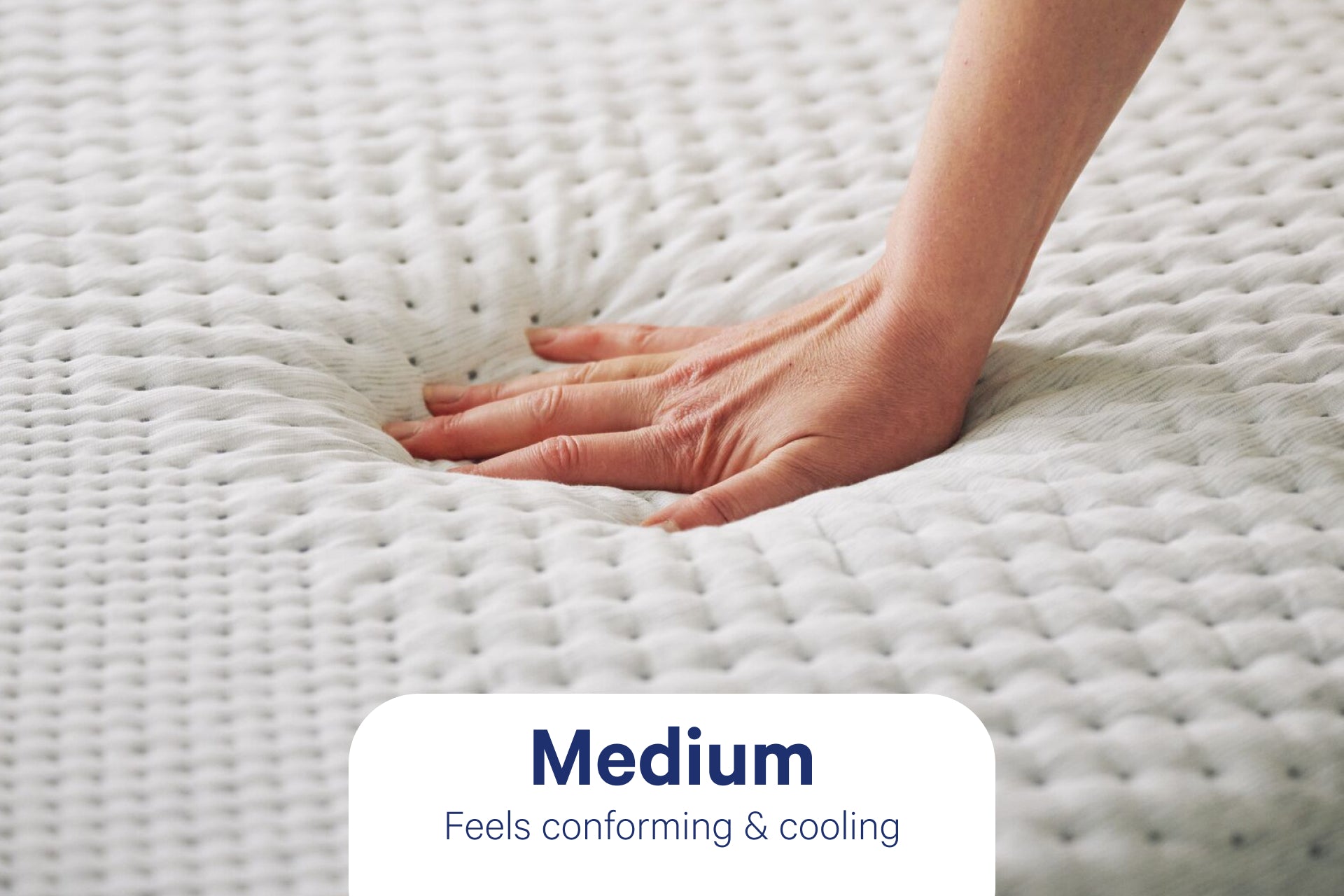
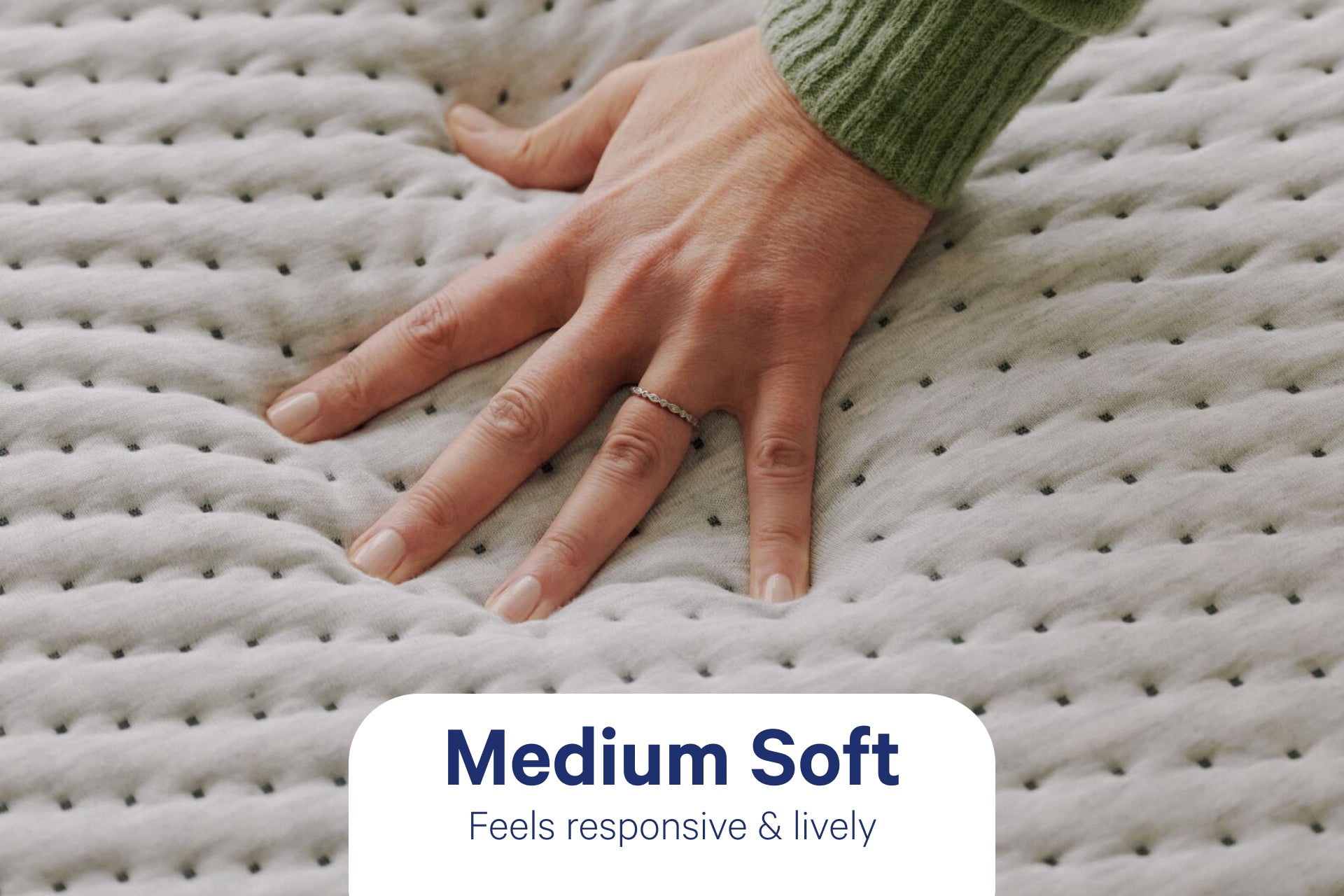
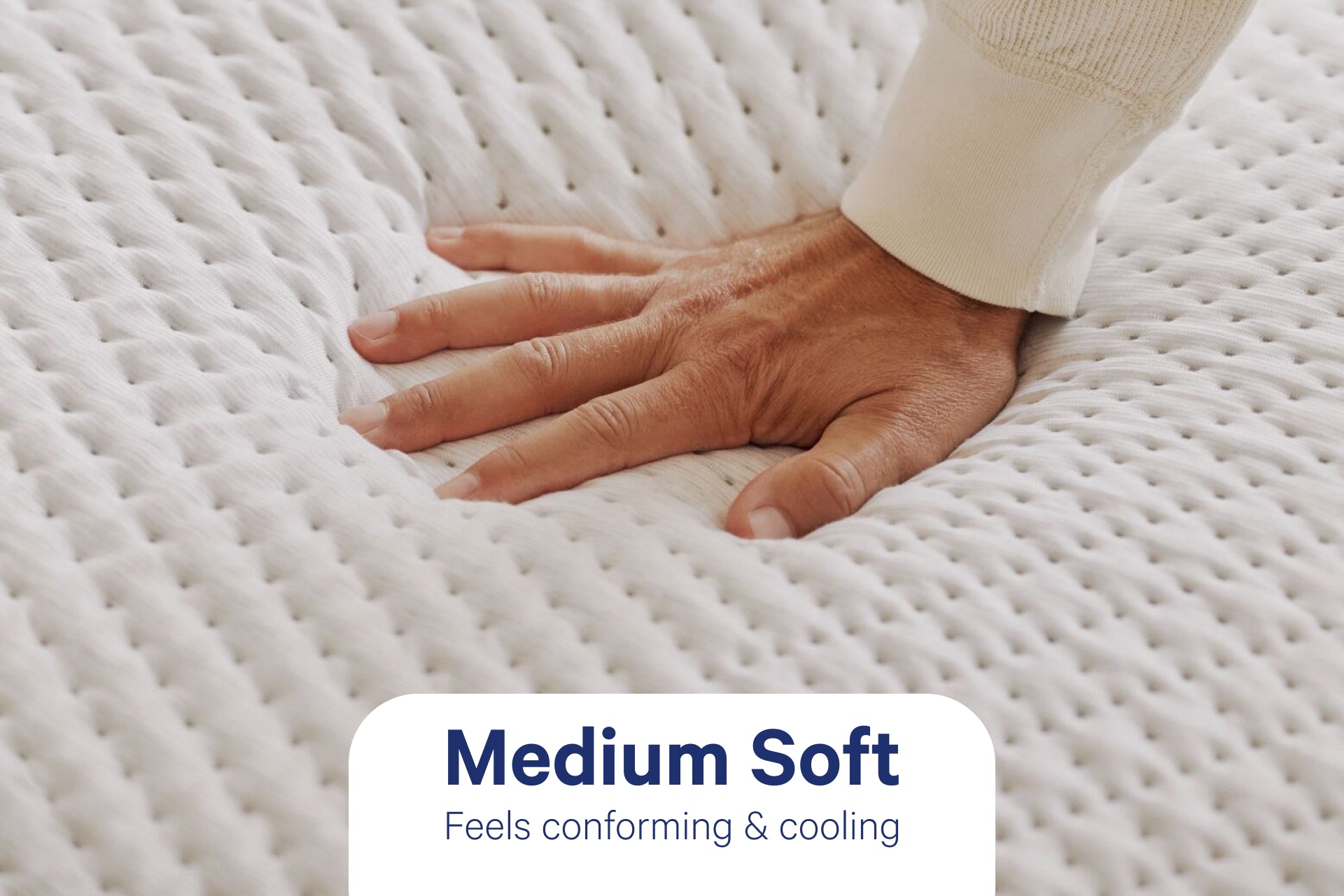
Most couples don't land in exactly the same place on firmness. A medium or medium-firm mattress tends to work for the widest range of body types and sleep positions, which is why it's the most common recommendation for two people. If the gap between preferences is significant, one of you wants plush and the other needs firm, a split mattress or adjustable base lets each side operate independently. That's not a compromise. That's just the smarter solution.
Temperature Regulation
Two people generate a lot of body heat. Mattresses that sleep hot, particularly dense traditional memory foam, turn that heat into a problem by morning. Look for materials built to manage it: open-cell foams, gel infusions, breathable cover fabrics, or coil layers that allow airflow through the mattress. If one partner consistently runs warm, this feature moves from "nice to have" to non-negotiable.
Edge Support
A mattress with reinforced edges gives you the full width of the surface to sleep on. That matters more than people realize when two people are splitting the space. Weak edges compress and sag, effectively shrinking the mattress. Strong edges also make getting in and out of bed easier, which is worth considering if either partner has back or joint issues.
Spinal Support for Different Body Types
Proper spinal alignment isn't a one-size answer. A 140-pound side sleeper needs different support than a 220-pound back sleeper. A mattress with zoned support, firmer under the hips and lumbar and softer under the shoulders, like what’s featured in Casper’s mattresses, handles a wider range of body types without either partner sacrificing alignment. This is where construction quality shows up in how you feel in the morning.
Types of Mattresses for Couples
Each mattress type has real trade-offs. Here's how they actually perform when two people are sleeping on them.
Memory Foam Mattresses
Memory foam absorbs movement exceptionally well, making it one of the better choices for couples where one partner is a light sleeper. It contours closely to the body and relieves pressure at the shoulders and hips. The trade-off: traditional memory foam sleeps warm and has a slow, sinking feel that some people find difficult to move around on. Newer open-cell and gel-infused foams address the heat issue to varying degrees.
Hybrid Mattresses
Hybrids combine a comfort layer of foam with a support core of individually wrapped coils. For couples, they cover the most ground: the foam layer handles motion isolation and pressure relief, while the coil system provides airflow, responsive support, and stronger edges. If you're buying one mattress meant to work for two different sleepers, a hybrid is usually the place to start.
Innerspring Mattresses
Innersprings run cool and have a bouncy, responsive feel that some sleepers genuinely prefer. The downside for couples is motion transfer. Connected coils move together, so a restless partner affects more of the surface. If both of you prefer the same firmness and neither is a particularly disruptive sleeper, innerspring can work well. Otherwise, it's a harder sell.

Adjustable Beds: A Game-Changer for Couples with Different Needs
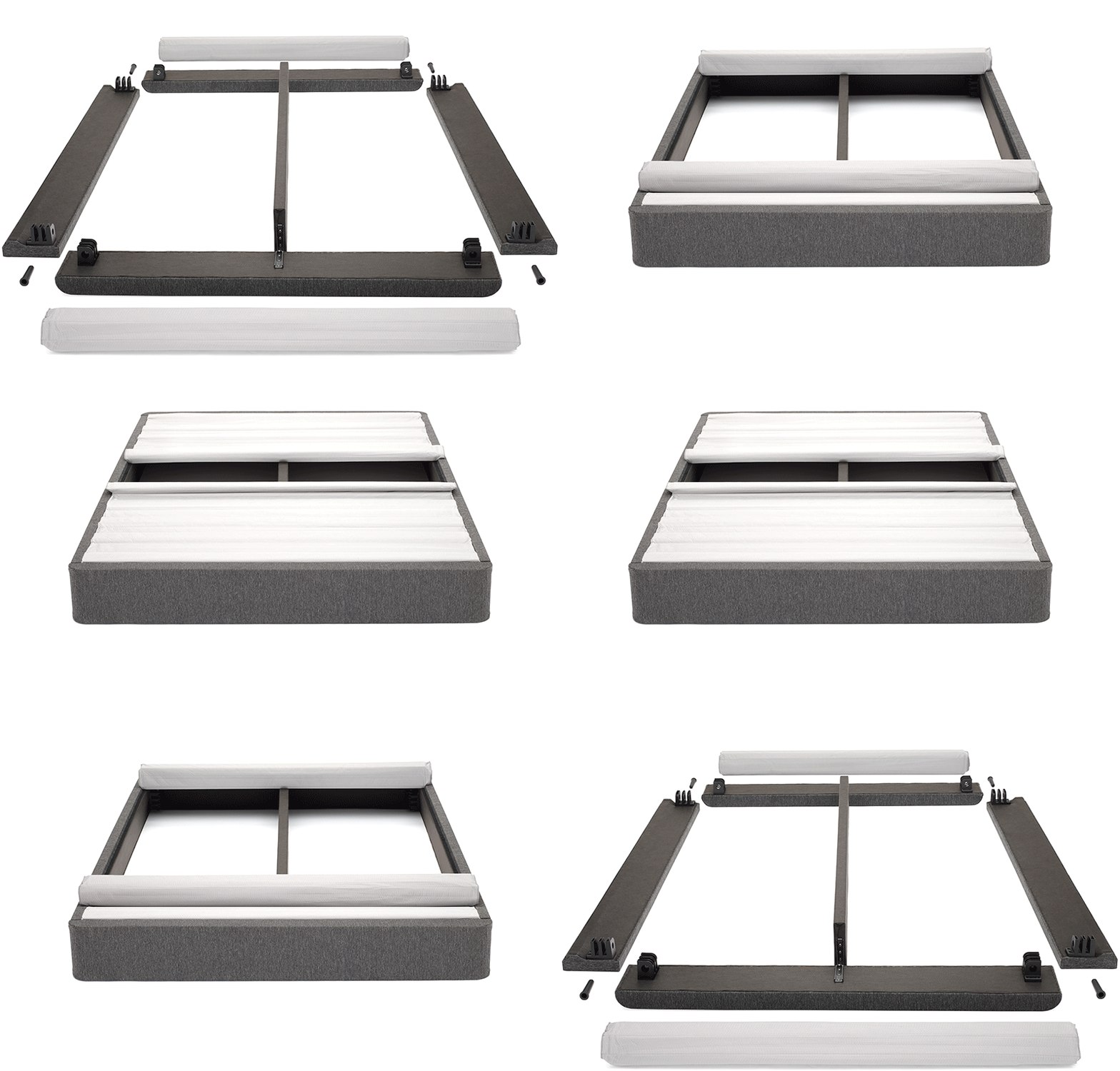
An adjustable bed, also called an adjustable base or power base, is a motorized bed frame that lets you change the position of the mattress surface. You can raise the head, elevate the foot, or do both at once. Some models add features like under-bed lighting, massage settings, or USB charging ports. Most adjustable bases are designed to work with compatible foam or hybrid mattresses, not traditional innerspring.
For couples, the real advantage is independence. A split adjustable base pairs two separate twin XL frames side by side, each with its own mattress. Each partner controls their own side, so one person can elevate their head for reading or acid reflux relief while the other lies completely flat. Neither disrupts the other.
That kind of customization helps solve problems that no single mattress can fully address on its own. Snoring, sleep apnea, lower back pain, post-surgery recovery, and pregnancy discomfort all respond differently to elevation. If you and your partner have meaningfully different sleep needs beyond firmness preferences, an adjustable base is worth taking seriously.
It's the highest-investment option in this guide, but for the right couple, it removes the concept of compromise from the equation entirely. Shop adjustable bed frames from Casper if this sounds like a fit for you.
Tips for Choosing the Right Mattress for Couples
Shop and Test Together
A mattress one person picks out alone is a guess for the other. Both partners should be part of the process, whether that means going in-store or using an at-home trial period. Most quality mattresses come with significant trial windows specifically because it takes a few weeks for your body to adjust to a new sleep surface. Casper mattresses come with a 100-night, risk-free sleep trial. First impressions aren't always accurate. Use the full trial. Both of you.
Size Matters More Than You Think
If you're in a queen and it's feeling tight, the king is the upgrade that actually changes the experience. A standard king gives each person roughly 38 inches of width, close to a twin XL each. A split king goes further, pairing two twin XLs side by side, each fully independent. More space means fewer disturbances.
Think Beyond the Mattress
The right mattress does a lot of the work, but it doesn't have to do all of it. Individual pillows with different heights and firmness levels let each person dial in neck support independently. A split adjustable base lets one partner elevate their head without affecting the other side. Separate duvets, a Scandinavian approach worth stealing, eliminate the blanket-stealing problem entirely. Together, these additions give each person real ownership over their side of the bed.
Why Casper Mattresses Are a Smart Choice for Couples
Casper mattresses are designed with the reality of shared sleep in mind. Zoned support technology provides targeted firmness where the body needs it most: firmer under the hips and lower back, softer at the shoulders. Two people with different builds can both sleep in proper alignment on the same mattress. Breathable, open-cell foam and engineered cover fabrics pull heat away from the sleep surface so warmth doesn't build up between partners overnight.
Every Casper mattress is built to minimize motion transfer, so a partner's early alarm or late-night repositioning stays on their side. Reinforced edges across the lineup mean you're using every inch of the mattress, not just the middle.
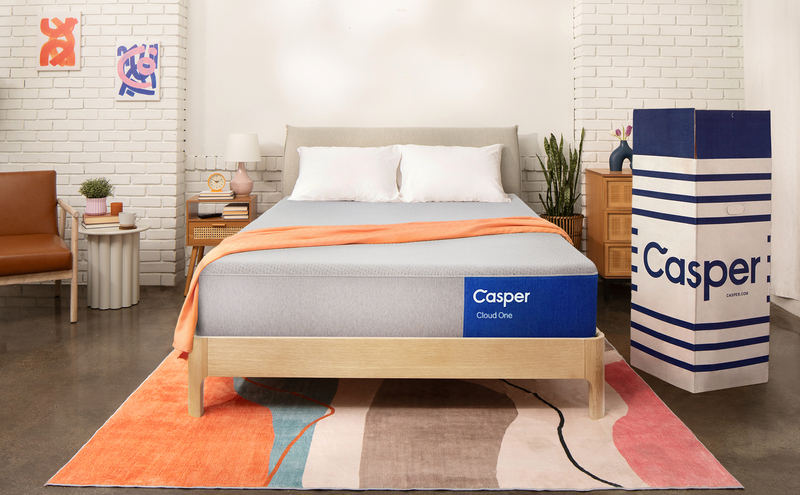
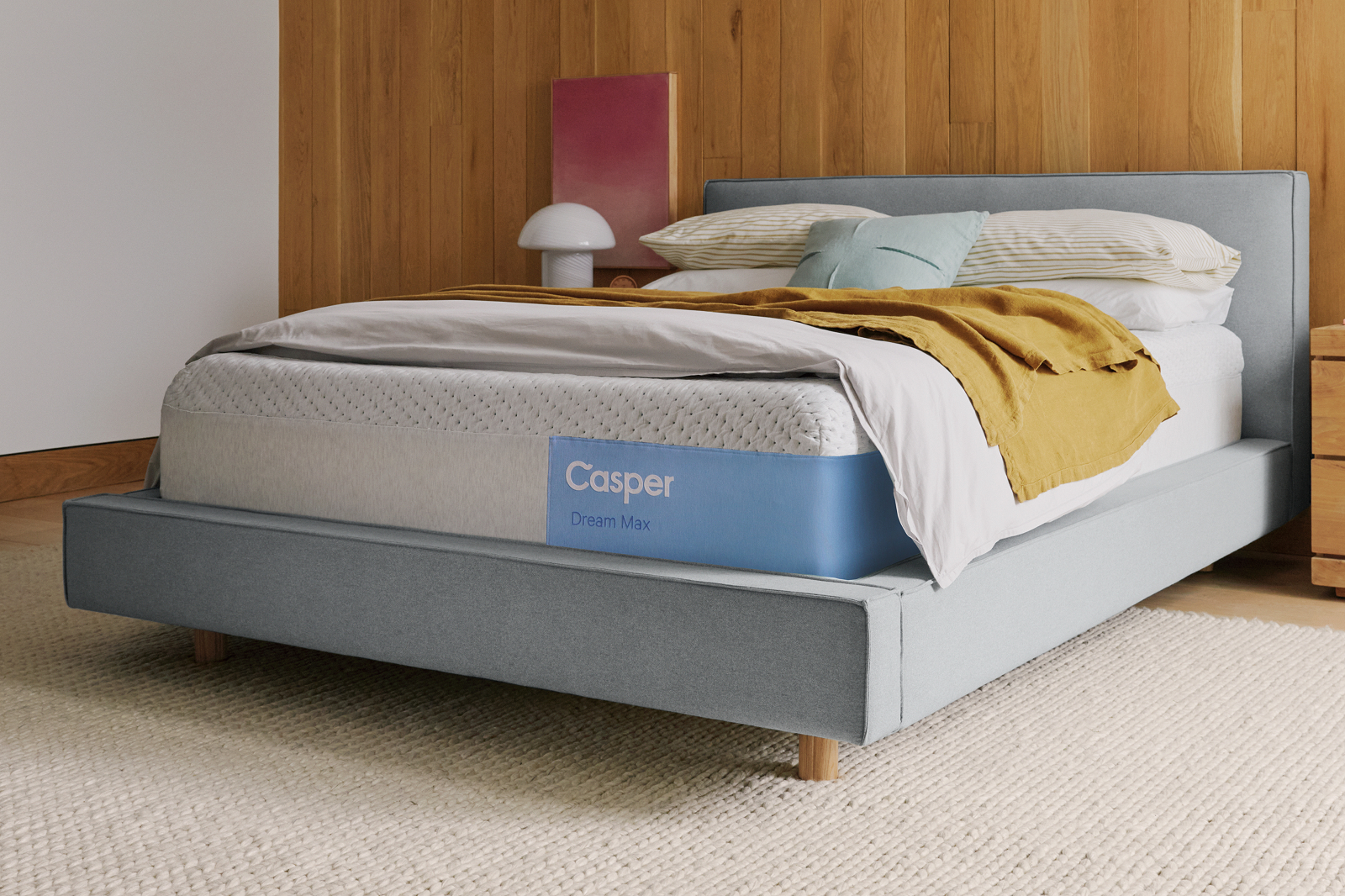
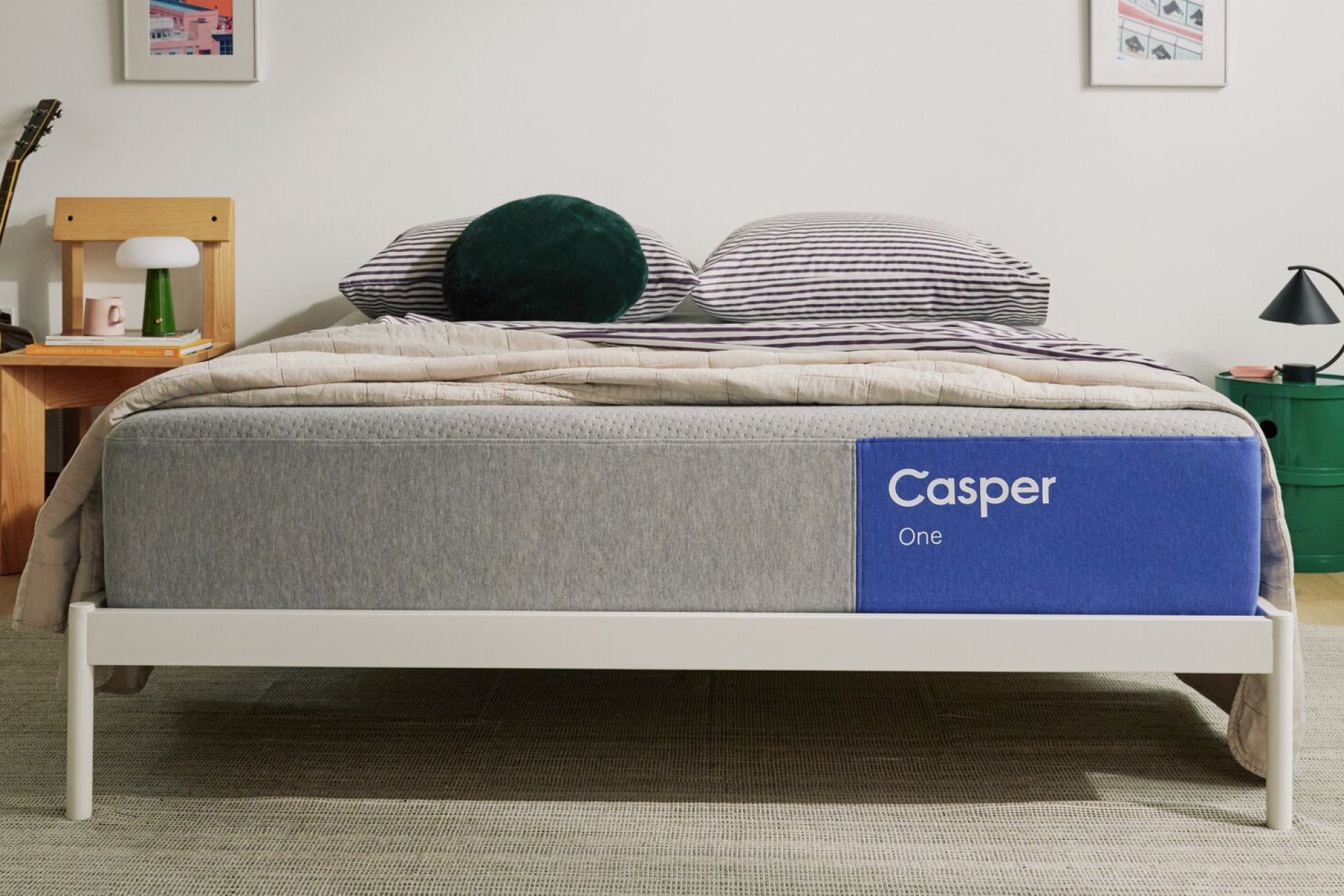
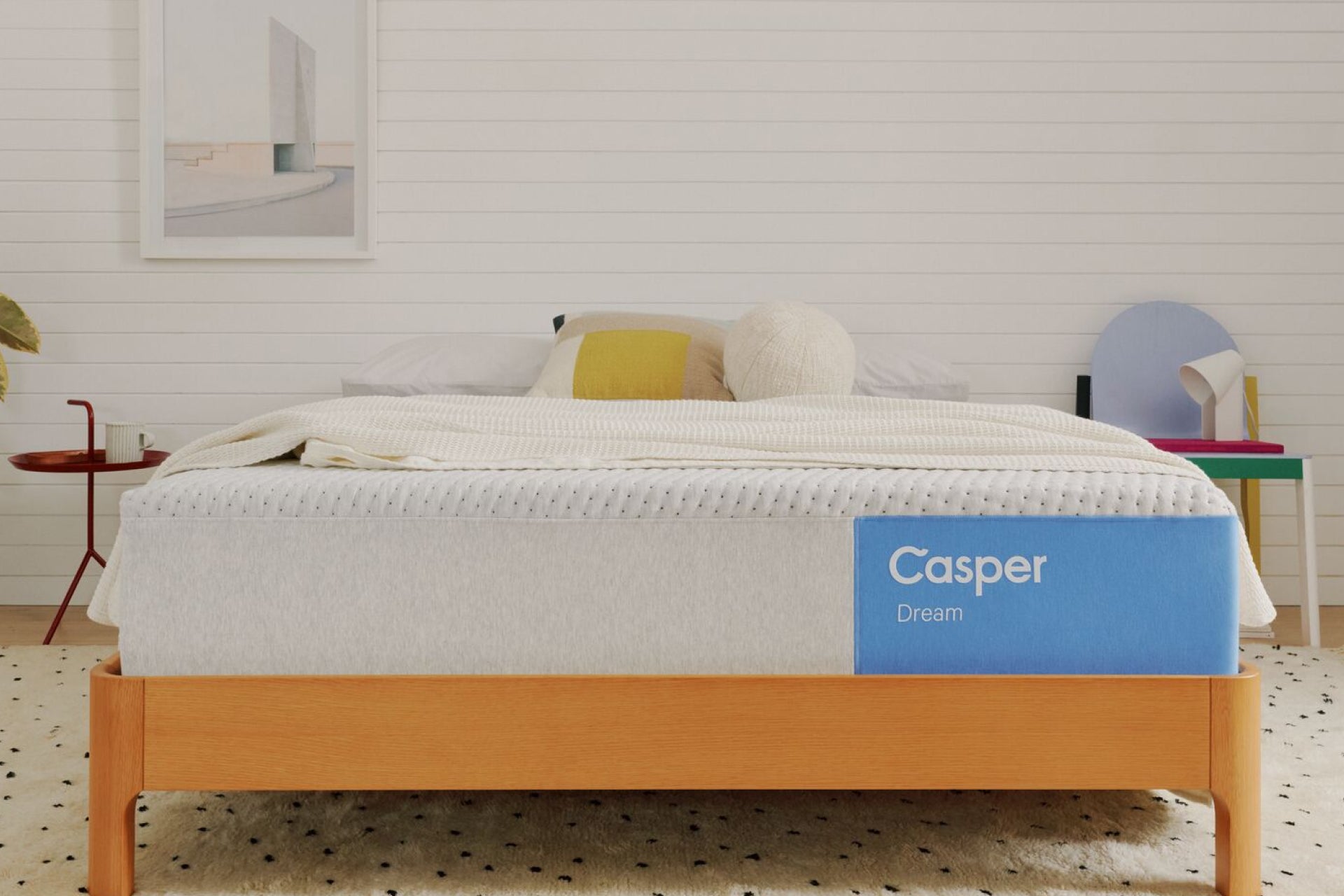
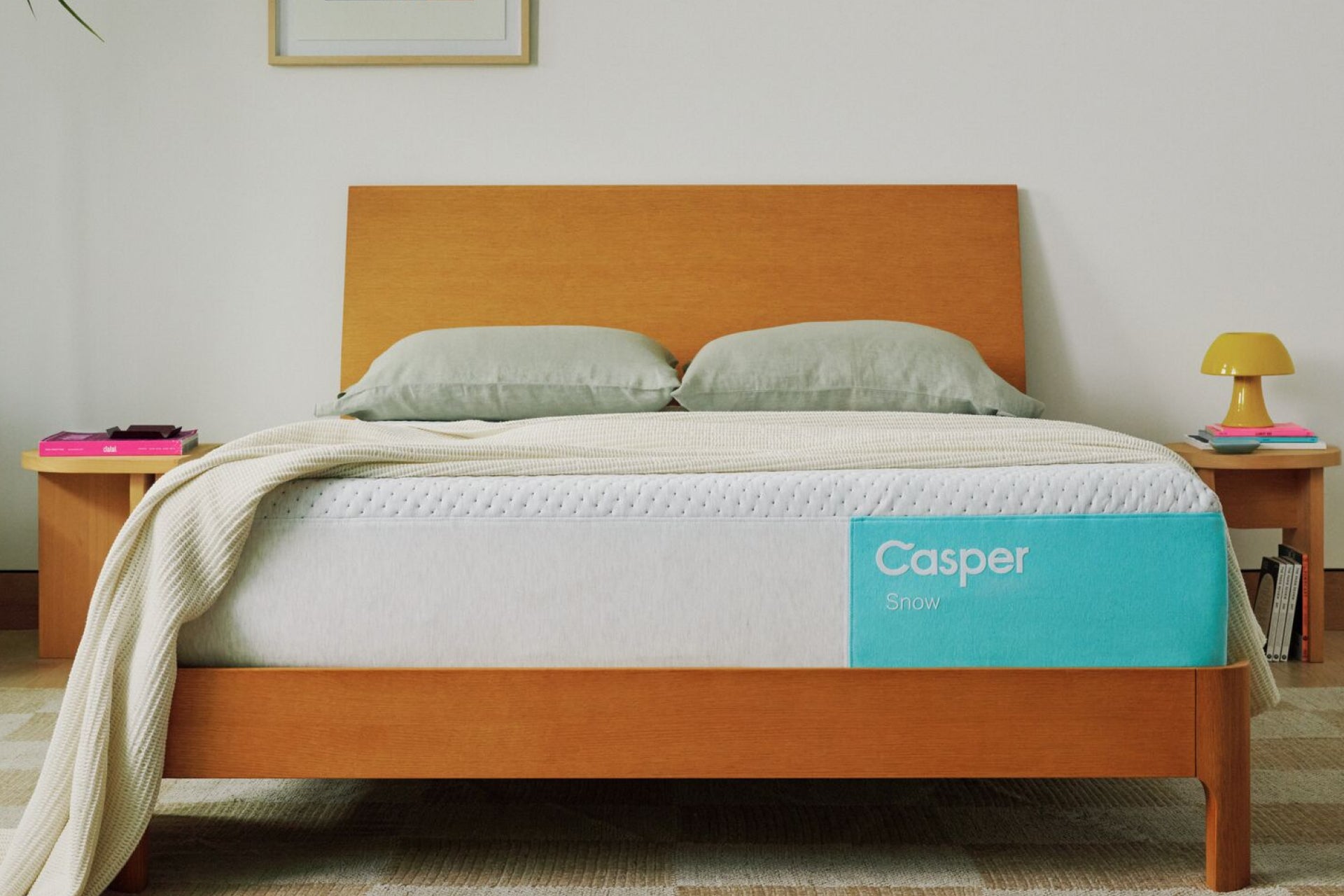
For couples who want the full package of motion isolation, airflow, and responsive support, our hybrid mattress lineup is worth a close look. The Dream and Dream Max pair foam comfort layers with a coil system built to handle two sleepers. The Snow and Snow Max add active cooling technology for couples where temperature is the main sticking point. Prefer an all-foam feel? The One and Cloud One deliver close contouring and motion absorption that light sleepers tend to love.
Our 100-night sleep trial takes the guesswork out of the decision. Both partners get real time to sleep on it, adjust to it, and decide together. Find your fit at Casper today.