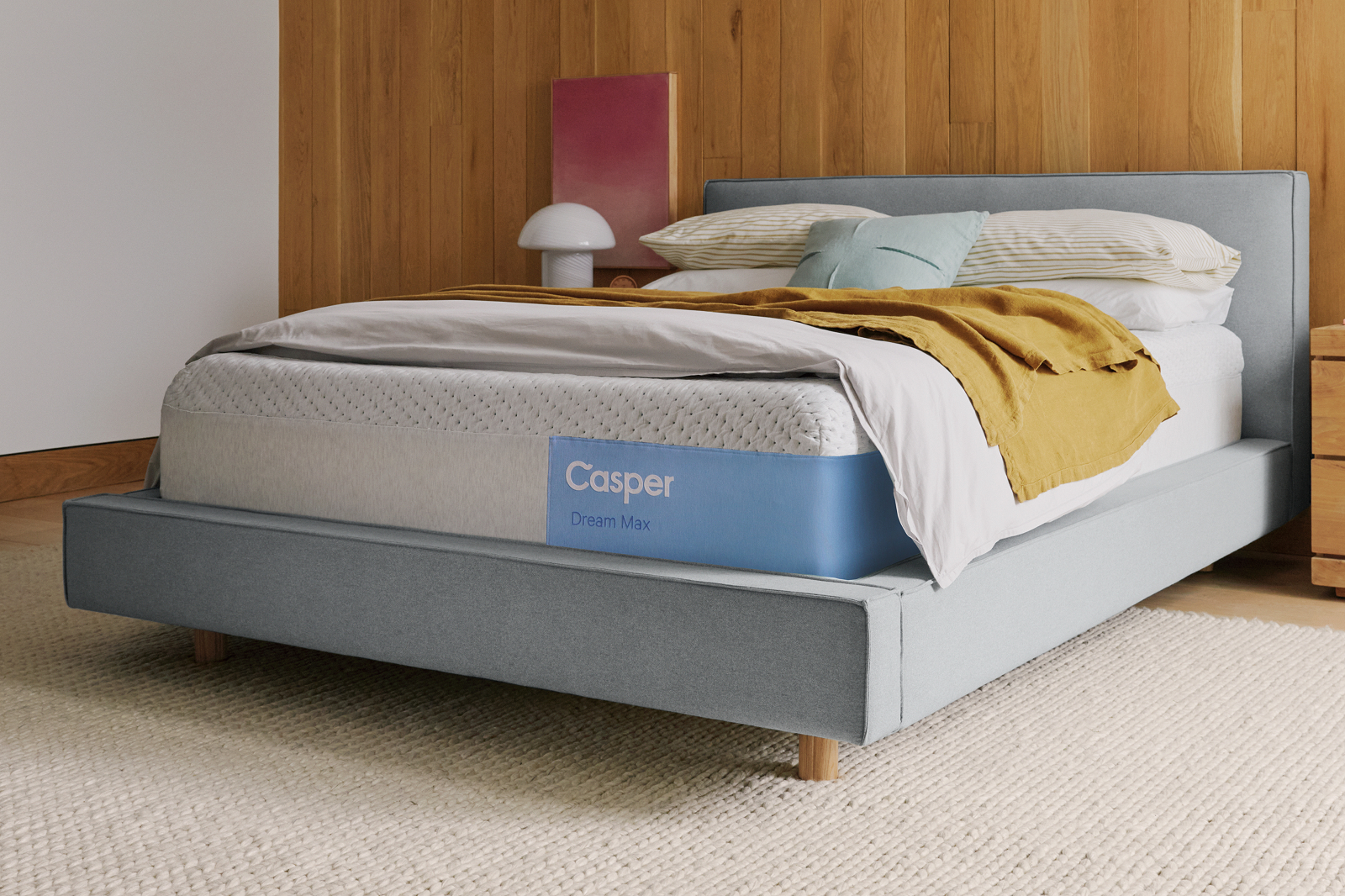







Updated Sept 21, 2026
Key Takeaways
- A queen mattress is 60" x 80", about 33 square feet, which gives each of two sleepers 30 inches of width.
- Plan for a 10' x 10' room at minimum, with 24 inches of clearance on each side, and remember a frame and headboard add up to 5 inches in each direction.
- Queen dimensions are standardized across brands, so frames and bedding are interchangeable. Variants like the Olympic and California queen are not, and they need specialty bedding.
A queen size bed is 60 inches wide and 80 inches long. That part is easy, and it is also the least useful thing anyone can tell you about a queen.
The harder questions come next. Will it fit your room with the door still opening? How much space does each person actually get? What happens to the footprint once you add a frame and a headboard? And why do so many fitted sheets give up on the fourth corner?
This guide answers all of it: queen bed dimensions in every unit you might need, how a queen compares to a king and a full, the room size and clearance to plan for, the queen variants worth thinking twice about, and the bedding that fits without a fight.

How Big Is a Queen Size Bed?
A queen mattress measures 60 inches wide by 80 inches long. In feet, that is 5 feet by 6 feet 8 inches. In centimeters, roughly 152 x 203 cm.
How wide is a queen bed? A queen bed is 60 inches wide. How long is a queen bed? A queen bed is 80 inches long.
That works out to about 33 square feet of sleep surface. Split between two people, each sleeper gets 30 inches of width. Hold that number, because it does most of the work in every comparison below.
One thing that makes shopping simpler: queen mattress dimensions are standardized. A queen from Casper is the same 60 x 80 as a queen from anyone else, so bed frames, foundations, sheets, and mattress protectors are interchangeable across brands. You are choosing a feel, not a footprint.
Queen Bed Dimensions Chart
|
Size |
Inches |
Centimeters |
Minimum Room Size |
Best For |
|---|---|---|---|---|
|
Twin |
38" x 75" |
96 x 191 cm |
7' x 10' |
Kids' rooms, studios, bunk setups |
|
Twin XL |
38" x 80" |
96 x 203 cm |
7' x 10' |
Dorms and taller solo sleepers |
|
Full |
53" x 75" |
135 x 191 cm |
9' x 10' |
Guest rooms and solo sleepers who sprawl |
|
Queen |
60" x 80" |
152 x 203 cm |
10' x 10' |
Couples and most primary bedrooms |
|
King |
76" x 80" |
193 x 203 cm |
12' x 12' |
Couples who want maximum width, or share with kids and pets |
|
California King |
72" x 84" |
183 x 213 cm |
12' x 12' |
Sleepers over 6'2" who still want a wide bed |
How a Queen Compares to Other Bed Sizes
Length changes very little between the common mattress sizes. Width changes everything. When you compare beds, compare the inches each person gets, because that is the number you feel at 3 a.m. when someone rolls over.
Queen vs. King
A queen is 60 inches wide. A king is 76 inches wide. Both are 80 inches long, so width is the entire difference: 16 inches of it.
Per person, that is 30 inches on a queen versus 38 inches on a king. Eight extra inches each sounds modest on paper and feels significant in practice, especially with a restless partner or a dog with strong opinions about the middle of the bed.
The tradeoffs are real, though. A king wants a 12 x 12 room to look and live right, where a queen is comfortable in 10 x 12. King sheets, duvets, and protectors cost more, and you will replace them for years. And a king is a genuinely awkward object to carry up a narrow staircase, which is worth knowing before delivery day rather than during it. For more, check out our queen vs. king mattress comparison.
Queen vs. Full
A queen is 60" x 80". A full is 53" x 75". That makes a queen 7 inches wider and 5 inches longer.
Per person, a full gives each sleeper about 26.5 inches versus 30 inches on a queen. For one person, a full is often plenty. For two, those three and a half inches each are the difference between comfortable and negotiating.
Length is the part people underestimate. A full is only 75 inches long, so anyone taller than about 5'10" will meet the edge of the mattress with their feet. A queen adds 5 inches and solves it for most sleepers. If you want the full breakdown, our full vs. queen guide goes deeper.
What Size Room Do You Need for a Queen Bed?
A queen fits in a 10' x 10' room. It lives comfortably in a 10' x 12', which leaves room for two nightstands and a dresser without anyone turning sideways to get by. At 12' x 12' or larger, you can add a reading chair or a bench at the foot and still have open floor.
The rule that matters more than square footage is clearance. Plan for at least 24 inches of walking space on each side of the bed and at the foot. Somewhere between 30 and 36 inches is where a bedroom stops feeling like a maze and starts feeling open.
Two things quietly change your numbers. A headboard adds 2 to 4 inches to the total length of the setup, and a footboard adds more than people expect. Measure the whole bed, not the mattress.
Then measure the route. Doorway width, hallway turns, and stairwell landings are where mattresses get stuck, and a 60-inch queen has less patience for a tight corner than a twin does. Boxed delivery takes most of the drama out of this, which we will come back to.
How to Arrange Furniture Around a Queen Bed
Centering the bed on the main wall is the layout that reads as intentional. It gives you matching nightstands, symmetrical lamps, and access from both sides, and it costs you floor space in a small room.
Pushing the bed into a corner buys back walking space and takes away a side. In a guest room, that is a fine trade. In a shared bedroom, someone is climbing over someone else every night, and that gets old fast.
Do the wall math before you buy anything. Two 20-inch nightstands plus a 60-inch bed needs 100 inches of uninterrupted wall, or 8 feet 4 inches. If your wall is 8 feet, one nightstand is going somewhere else.
The clearances people forget are the swinging ones: how far the bedroom door opens into the room, and whether the closet doors clear the corner of the mattress. Both are easier to check with a tape measure than to fix with a delivery already scheduled.

Other Queen Mattress Sizes
You will see a few queen variants listed online. They exist, they solve real problems, and they all come with the same catch: bedding, frames, and accessories are harder to find and cost more when you do find them.
Casper queen mattresses are made in the standard 60" x 80", so the sizes below are context for your search rather than options in our lineup.
|
Variant |
Dimensions |
Difference From Standard |
Who It Suits |
|---|---|---|---|
|
Olympic Queen |
66" x 80" |
6" wider |
Couples whose room cannot take a king |
|
California Queen |
60" x 84" |
4" longer |
Taller sleepers without room for a Cal King |
|
Split Queen |
Two 30" x 80" halves |
Same footprint, two pieces |
Adjustable bases and partners with different firmness needs |
|
RV or Short Queen |
60" x 75" |
5" shorter |
Campers, vans, and boats |
Olympic Queen (Expanded Queen)
An Olympic queen is 66 inches wide by 80 inches long, six inches wider than a standard queen. It is the middle step for couples who want more room than a queen but cannot give up the floor space a king demands.
The catch is supply. Sheets and frames sized for 66 inches are specialty items, they cost more, and your local store almost certainly does not stock them. For more, check out our Olympic queen vs. queen guide.
California Queen
A California queen is 60 inches wide by 84 inches long, four inches longer than standard. It is built for taller sleepers who want the extra length without the 72-inch width of a California King.
Same scarcity problem. You will be ordering bedding online, and you will be paying for the privilege.
Split Queen
A split queen is two 30" x 80" halves that together occupy a standard queen footprint. It exists for adjustable bases, where each side moves independently, and for couples who want different firmness levels without a king.
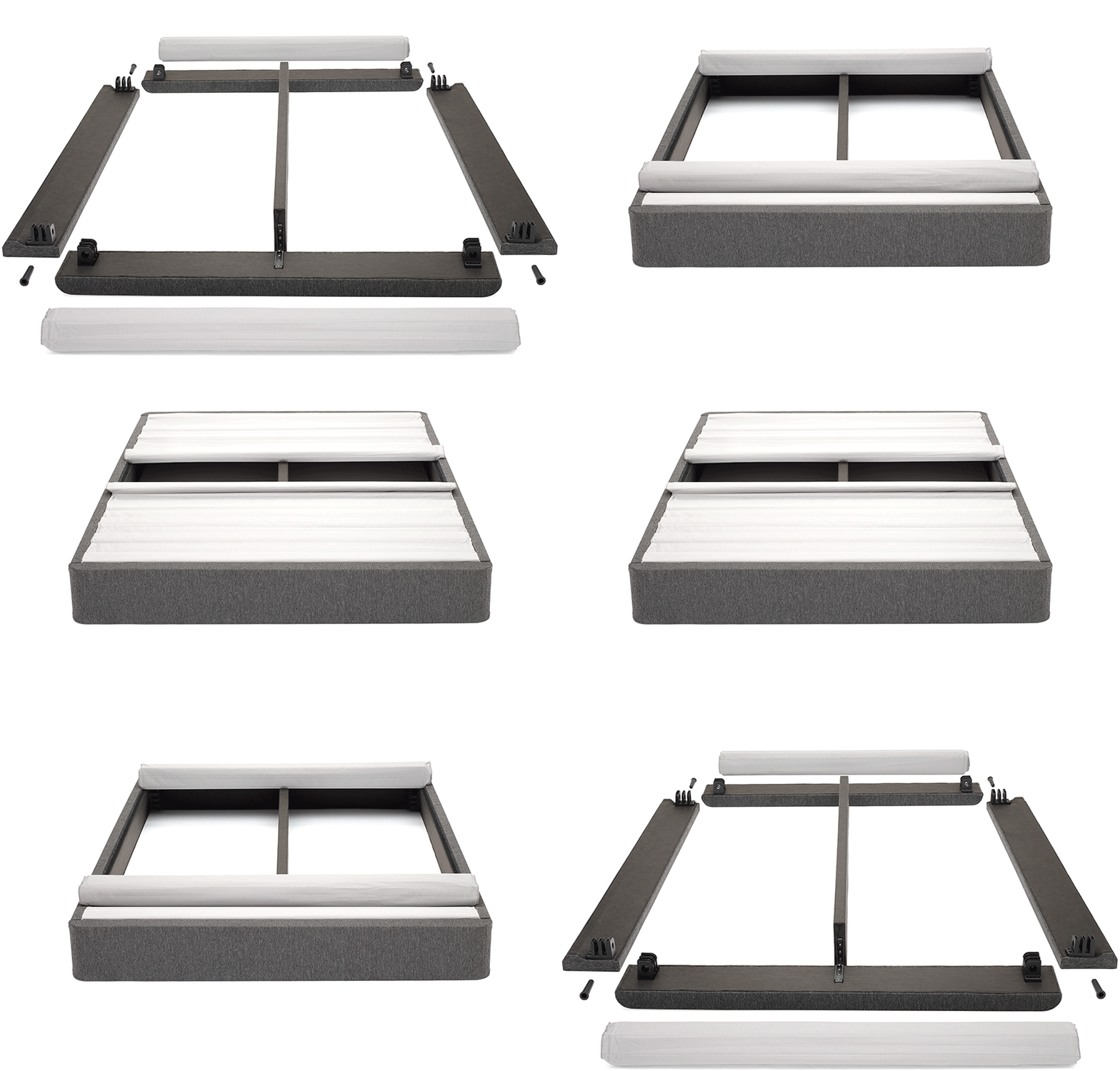
Worth noting that split foundations in the same 30" x 80" halves are common for a different reason: they get up tight staircases where a one-piece foundation will not.
RV or Short Queen
An RV queen, sometimes called a short queen, is 60 inches wide by 75 inches long. Five inches shorter than standard, sized for the sleeping area in a camper, van, or boat.
The pattern across all four is the same. Standard queen is the only one with universal bedding, frame, and accessory support, which is a large part of why it stays the most popular mattress size in the country.
Queen Bed Frame and Headboard Dimensions
Your mattress is always 60" x 80". Everything around it is not, and that is where room measurements go sideways.
A queen bed frame usually measures 62 to 65 inches wide and 82 to 86 inches long on the exterior, depending on how thick the side rails are. Plan for the frame to add up to 5 inches in each direction, so a 65" x 85" total footprint is a safe number to design around.
Queen headboards run 60 to 63 inches wide, so they either match the mattress or slightly overhang it. Height is where the range opens up: anywhere from 14 inches for a low platform style to 60 inches for a statement piece. That choice is about your ceiling height and wall proportion, not about fit. A tall headboard in a room with 8-foot ceilings can make the whole wall feel shorter.
How Tall Your Bed Will Actually Be
Add the pieces and check the total against your knees.
Queen mattresses are typically 10 to 14 inches thick. Platform frames sit 12 to 18 inches off the floor. Storage frames run 18 to 24 inches, and they need another 18 to 24 inches of open floor beside them for the drawers to clear. Adjustable bases keep the standard 60" x 80" footprint and add height depending on the model and whether you use the legs.
Rather than picking from a range, use the target: aim for a finished sleep surface around 24 to 25 inches from the floor. At that height you can sit on the edge with your feet flat and your knees at roughly 90 degrees, which is the difference between climbing into bed and simply sitting down on it. Frame height plus mattress thickness should land near that number.
Queen Bedding and Accessory Sizes
|
Item |
Queen Size |
Notes |
|---|---|---|
|
Fitted sheet |
60" x 80" |
Match pocket depth to your mattress thickness |
|
Flat sheet |
90" x 102" |
The extra width is the tuck |
|
Comforter or duvet |
88" to 90" wide x 92" to 100" long |
Wider options give more drape |
|
Pillows |
Queen, 20" x 30" |
Standard and queen pillows are the same size |
|
Rug |
8' x 10' standard, 6' x 9' workable |
Set it so it extends past the sides of the bed |
|
Foundation or box spring |
60" x 80" |
Profiles typically run from about 5" to 9" tall |
Two numbers worth knowing. Two queen pillows placed side by side measure exactly 60 inches, which is the exact width of the bed. That is not a coincidence, and it is the quickest way to tell if your pillow arrangement is fighting your mattress.
The second is drape math. Take the comforter width, subtract the 60-inch mattress width, and divide by two. That is your overhang per side. A 90-inch comforter gives you 15 inches on each side, which covers a standard mattress and a low platform frame. If your mattress is 14 inches thick and sitting on a tall storage base, that same comforter will look short.
The failure people actually hit is pocket depth. A fitted sheet labeled queen fits a 60" x 80" mattress, but a standard pocket tops out around 12 inches or so. Pair it with a 14-inch mattress and a protector and you get the 2 a.m. corner pop. Check the pocket depth against your mattress height before you check anything else, and shop queen sheet sets accordingly.

Is a Queen the Right Size for You?
Couples
On a queen, each person gets 30 inches of width. A twin is 38 inches, so you are each sleeping in something 8 inches narrower than a twin bed.
For most couples, that works, and it has for decades. Size up when you are two restless sleepers who wake each other, when one partner is over 6'2", or when a dog sleeps sideways across the foot of the bed with no plans to change.
Solo Sleepers
For one person, a queen is the standard upgrade from a full mattress, and the reason is length as much as width. Those extra 5 inches settle the question for anyone near 6 feet, and the extra 7 inches of width means you can starfish without meeting an edge.
A full is genuinely enough if you sleep still, you are under about 5'10", and your room is tight. A queen is the practical pick for guest rooms and smaller homes, because it accommodates one sleeper generously and two comfortably when your in-laws visit.
Tall Sleepers
Eighty inches of length works for sleepers up to roughly 6'2" before feet start finding the edge. Above that, look at a California King at 84 inches, or a California queen if width is not the problem and floor space is.
When to Choose a King Instead
Sometimes the honest answer is that a queen is not your bed.
Choose a king if you share the bed with kids or pets on a regular basis, if you and your partner both move a lot in your sleep, if one of you is over 6'2" and sprawls, or if your bedroom is 12 x 12 or larger and the space would otherwise sit empty. Buying a queen to save money and replacing it in two years is the more expensive path.
Shop Casper Queen Mattresses
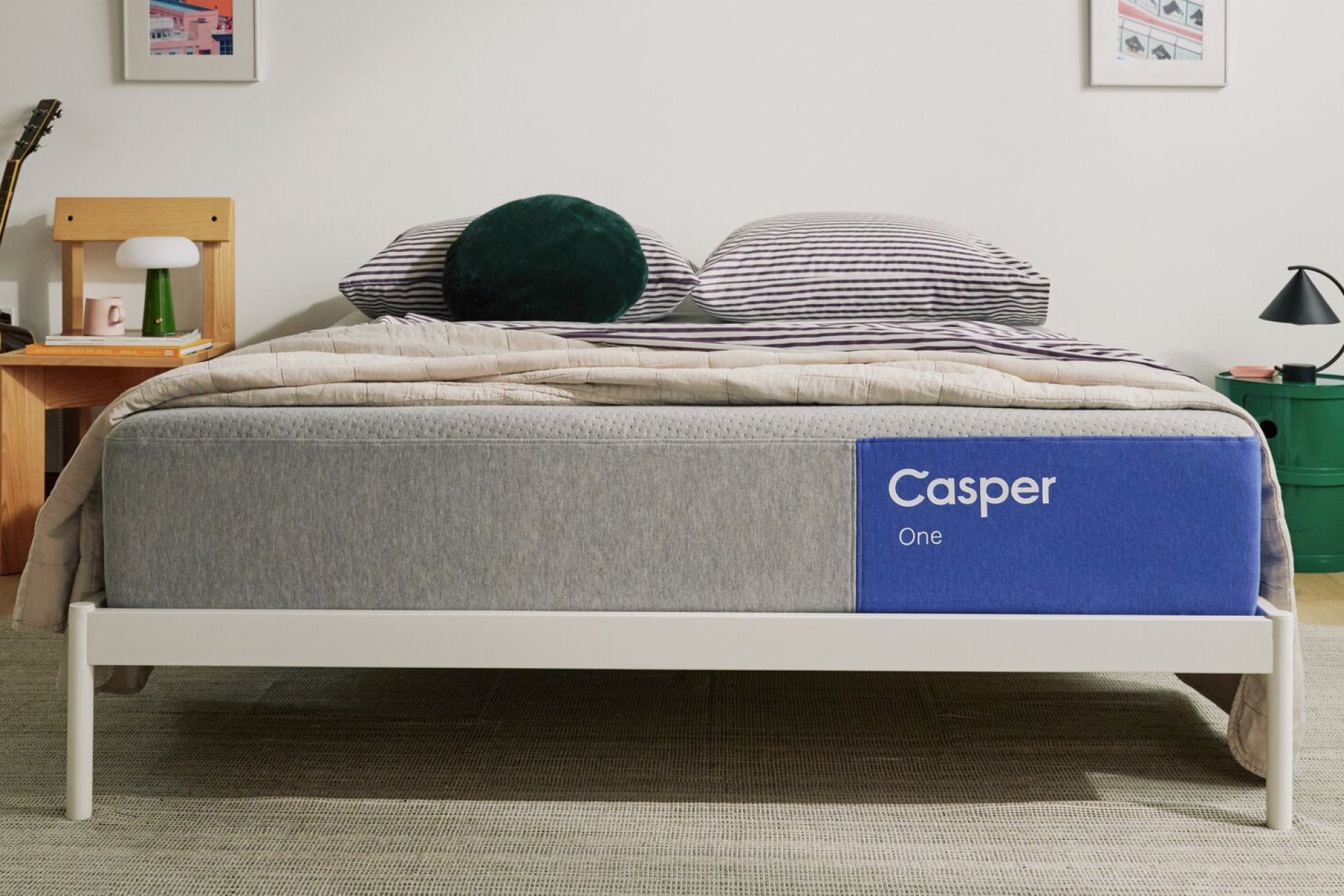
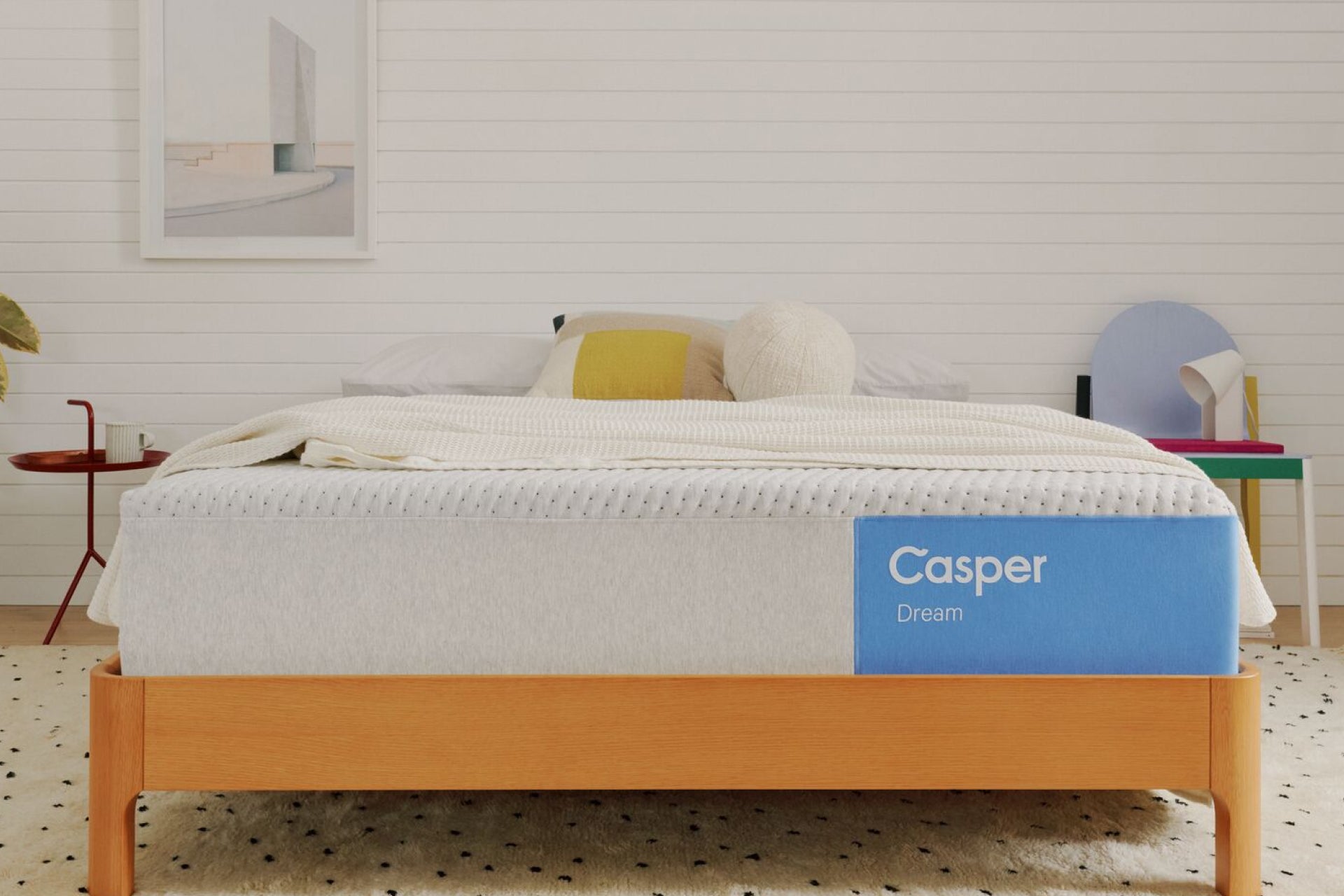
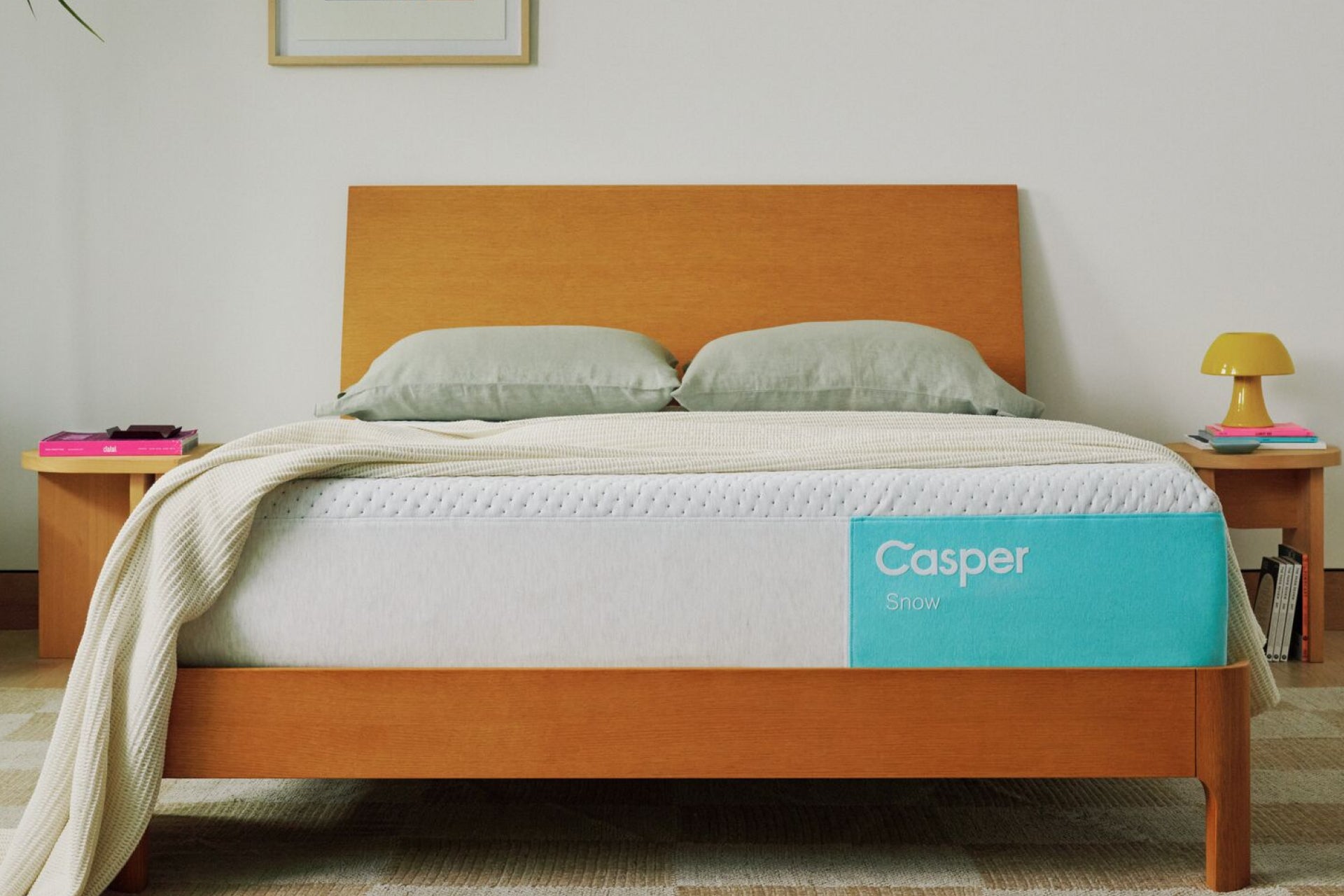
Every Casper mattress comes in a queen. The One and Cloud One are our all-foam options, Dream and Snow add encased coils, and Dream Max and Snow Max are engineered for maximum support where your body needs it most.
Each one ships to your door in a box, which is why the staircase measurement worries most people more than it should. And with our 100-night trial, you get to find out how 60 by 80 feels in your actual bedroom, not in a showroom.
Queen Size Bed Dimensions FAQs
How big is a queen bed in feet?
A queen bed is 5 feet wide by 6 feet 8 inches long. That comes out to about 33 square feet of sleep surface. It is the most popular mattress size in the United States, largely because those dimensions fit a standard 10 x 10 bedroom while still sleeping two people.
Is a queen bed big enough for two people?
Yes, for most couples. Each person gets 30 inches of width, which is 8 inches narrower than a twin bed. It works well unless you are both restless sleepers, one partner is over 6'2", or pets share the bed. In those cases, a king is worth the extra floor space.
How much bigger is a king than a queen?
A king is 16 inches wider than a queen, at 76 inches versus 60 inches. Both are 80 inches long, so length is identical. Per person, that is 38 inches on a king compared to 30 inches on a queen. You need roughly a 12 x 12 room to make a king work.
Do you need a box spring for a queen bed?
Not with a platform frame or a slatted frame, both of which provide their own support. You do need a foundation with a traditional metal bed frame, which is built to hold one. A queen foundation measures 60" x 80", the same as the mattress, and typically runs 5 to 9 inches tall.
Will a queen bed fit in a 10x10 room?
Yes. A 60" x 80" queen centered in a 10 x 10 room leaves about 24 inches of clearance on each side, which is tight but walkable. Something usually has to go, though. Most people drop the dresser or the second nightstand to keep the walkway comfortable.
How thick is a queen mattress?
Most queen mattresses are 10 to 14 inches thick. That range matters most for sheets: a standard fitted sheet pocket handles about 12 inches, so a thicker mattress plus a protector needs deep-pocket sheets. Thickness does not change the 60" x 80" footprint or the frame you need.
Are all queen mattresses the same size?
Yes. A standard queen is 60" x 80" across every brand, which is why frames and bedding are interchangeable. The exceptions are specialty variants like the Olympic queen at 66" x 80" and the California queen at 60" x 84", and both require specialty bedding you will have to order online.
How much does a queen mattress weigh?
A queen mattress weighs roughly 70 to 150 pounds, depending on whether it is all-foam or a hybrid with coils. That range decides whether you can set it up solo or need a second person. Boxed mattresses are easier to move into the room, since the weight arrives compressed.