






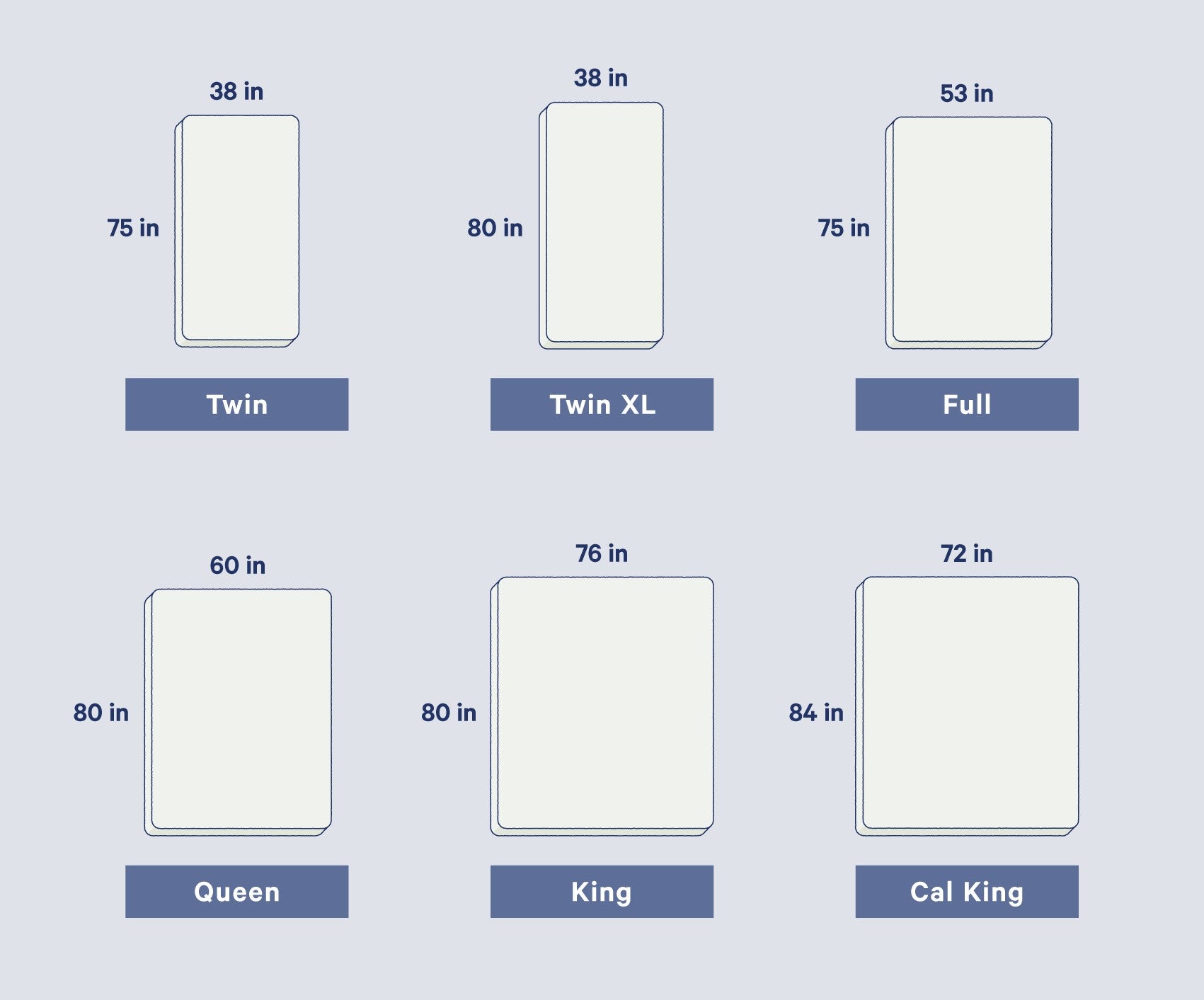
In this mattress size guide, we illustrate the mattress dimensions of all six standard mattress sizes—and some of the lesser-known options—to help you choose the best mattress for your needs.
Shop all mattressesGood for children or single sleepers in small rooms
Extra length for taller sleepers and groing children
Suitable for single sleepers wanting extra space to stretch out
Most popular size, ideal for couples
Extra spacious for couples and families
Slightly narrower but longer than King, good for taller sleepers
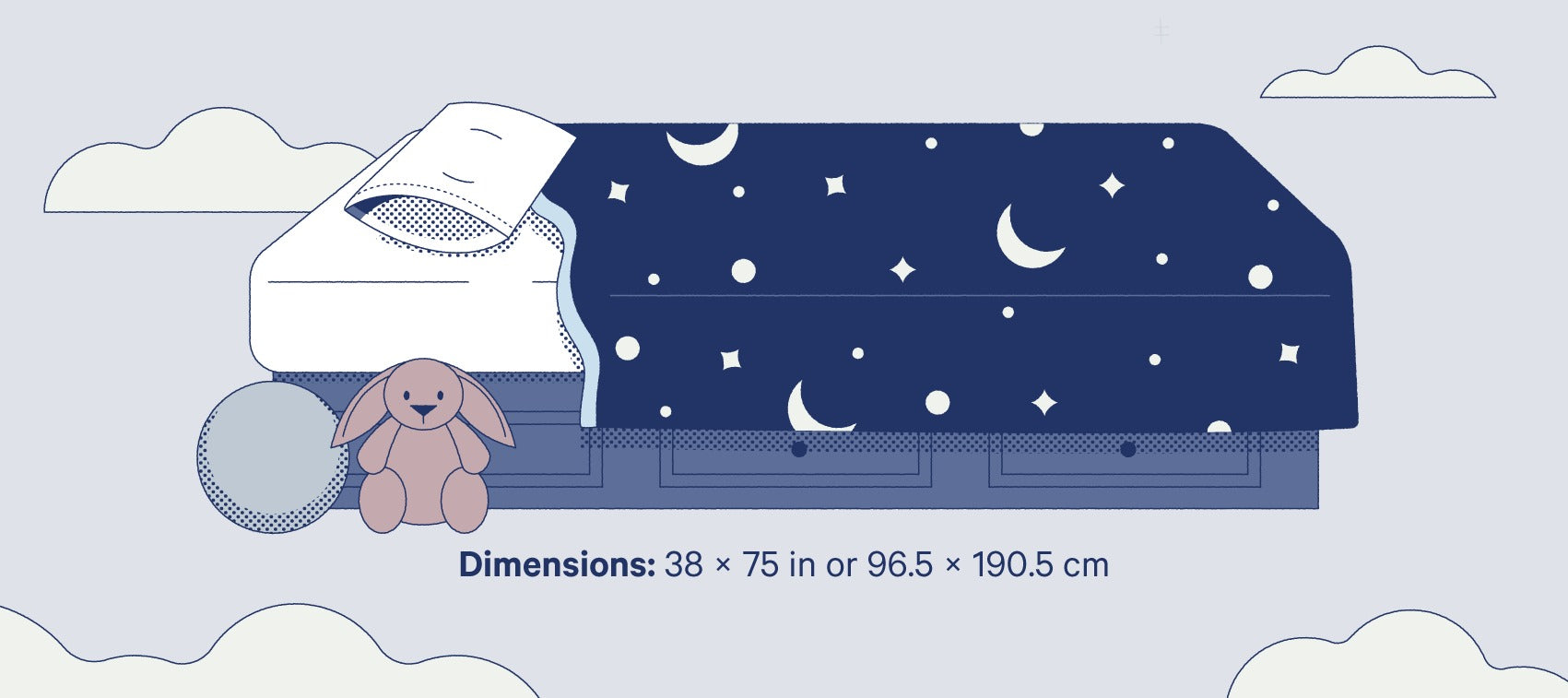
A Twin mattress measures 38 inches wide by 75 inches long and is the smallest standard bed sold in the U.S. That footprint fits comfortably in a child's bedroom, a bunk bed frame, or a studio apartment where floor space is a constraint. It is not a practical choice for adults over 5'10", and it won't work for two sleepers regardless of how friendly they are.
Shop Twin MattressesBest for: kids, bunk beds or single sleepers.
Minimum room size: The minimum room size for a twin bed to fit naturally is 7 x 9 feet. But if you’re looking to outfit the room with cozy accessories like a desk and dresser, an 8 x 10 square foot room may be required for the bed to fit more comfortably.
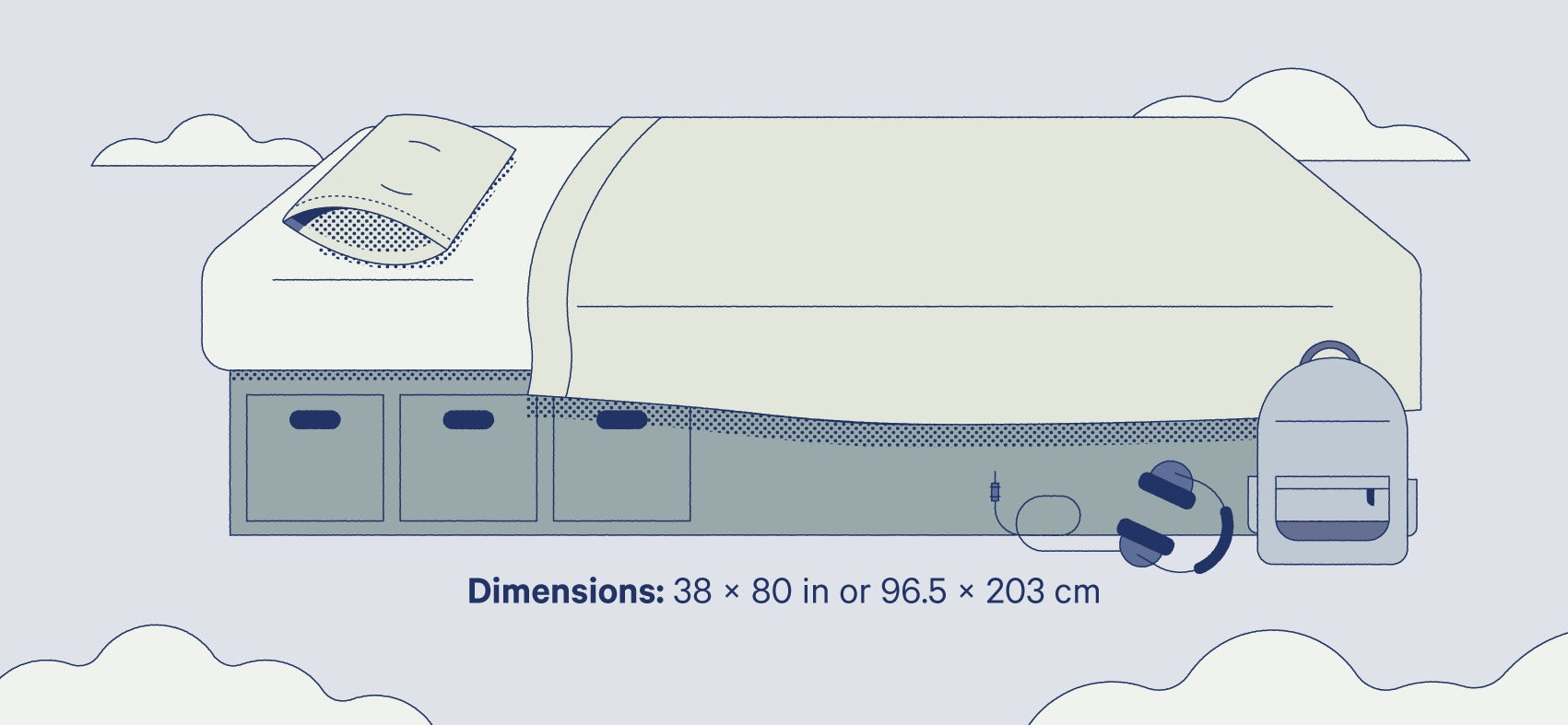
A Twin XL mattress measures 38 inches wide by 80 inches long. It carries the same narrow width as a standard Twin but adds 5 inches of length — enough to make a real difference for sleepers between 5'10" and 6'5". It is the default size in college dormitory rooms across the country, which is why most dorm bedding is sized to fit it. Two Twin XL mattresses pushed together form a Split King, a configuration used with adjustable bed frames so two sleepers can set different head and foot elevations independently.
Shop Twin XL MattressesBest for: taller teenagers, single adults or anyone with limited space.
Minimum room size: 8x10 feet. Narrow rooms of at least 7 feet wide can also work if the bed is placed along the longer wall.
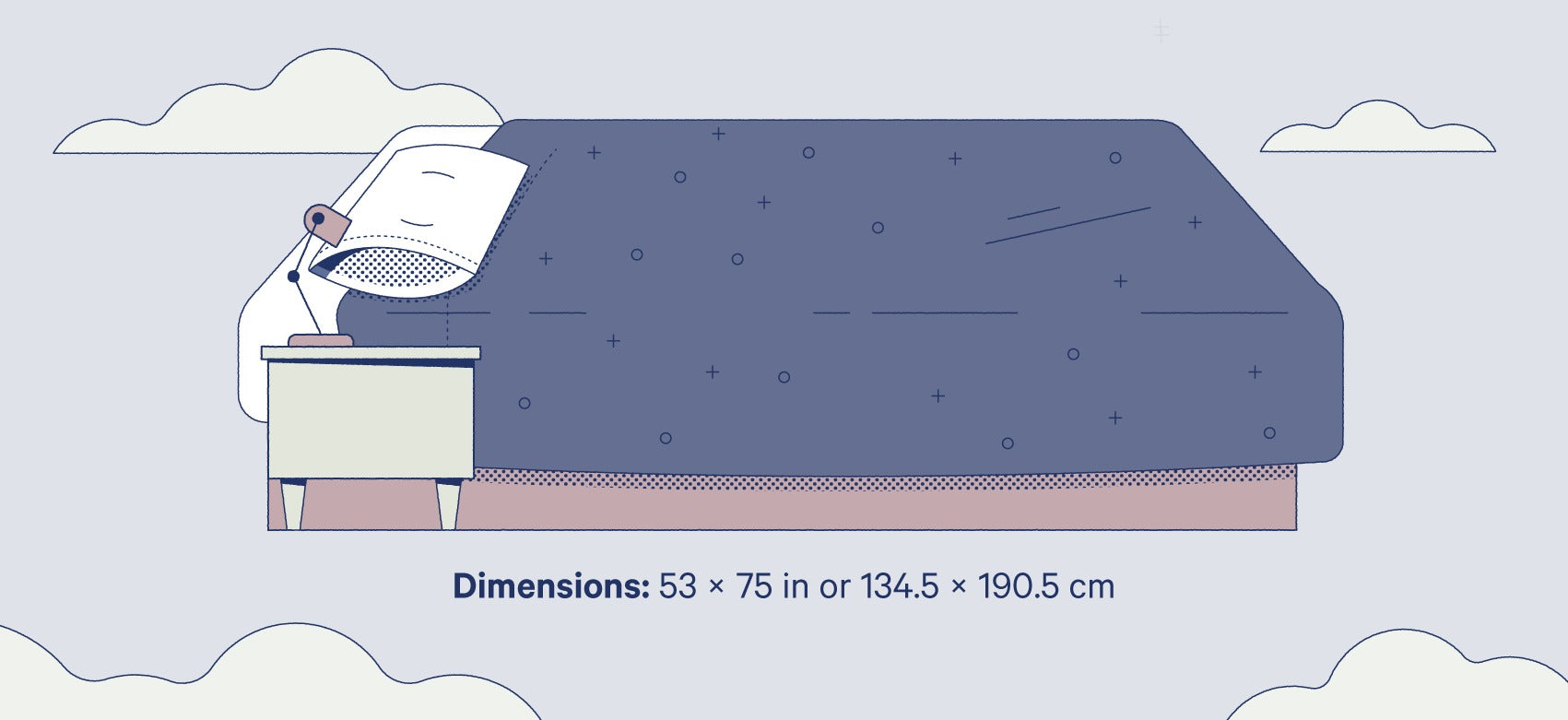
A full mattress (also called a double) measures 53 inches wide by 75 inches long. It gives a single sleeper 15 more inches of width than a twin, which is meaningful if you sleep with your arms out or shift positions often. For two adults, a full provides each person roughly 26.5 inches of horizontal space, which is narrower than most people's shoulders. It works for couples who genuinely don't mind being close, but anyone who describes themselves as a light sleeper or a restless sleeper will probably find themselves reaching for a Queen within a year.
Shop Full MattressesBest for: young adults, couples who like to cuddle or guest rooms.
Minimum room size: 9 x 11 feet minimum for a full bed to fit comfortably.
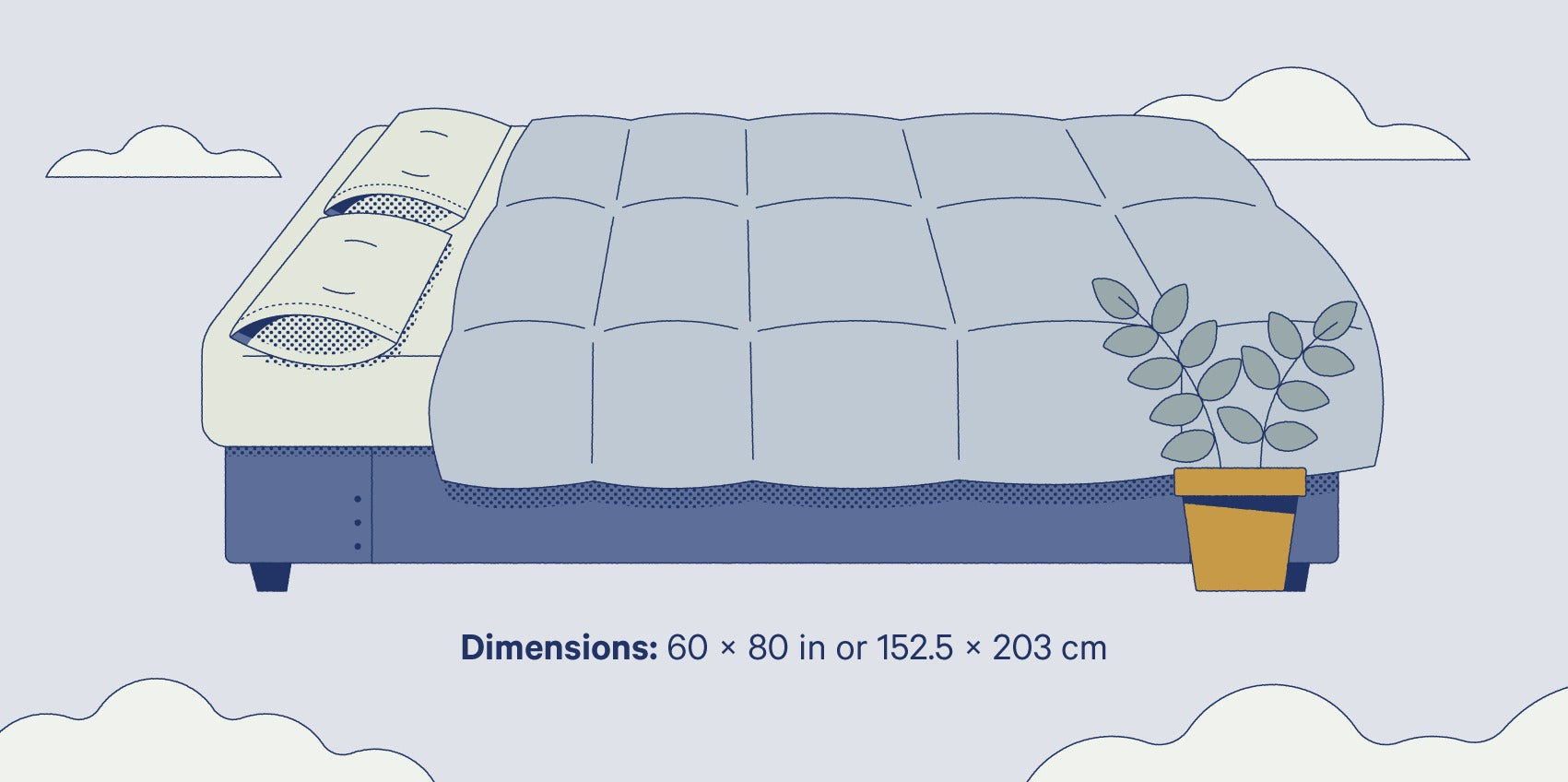
A queen mattress measures 60 inches wide by 80 inches long. It is the most popular mattress size in the United States, accounting for the majority of mattress sales, and for most couples it represents the practical sweet spot between sleeping space and bedroom footprint. Each person gets 30 inches of width — about 3.5 more inches than a full offers — which is enough to meaningfully reduce sleep disturbance from a partner who moves around.
Queen mattresses also accommodate a small to medium dog sleeping at the foot of the bed without anyone getting squeezed. They fit master bedrooms of most sizes and are the go-to choice when "what size mattress should I buy?" is the question, and "I don't know yet" is the answer.
Best for: couples or adults who like to sprawl out.
Minimum room size: 10 x 10 feet; with 10 x 12 feet feeling more comfortable for furniture and walkways.
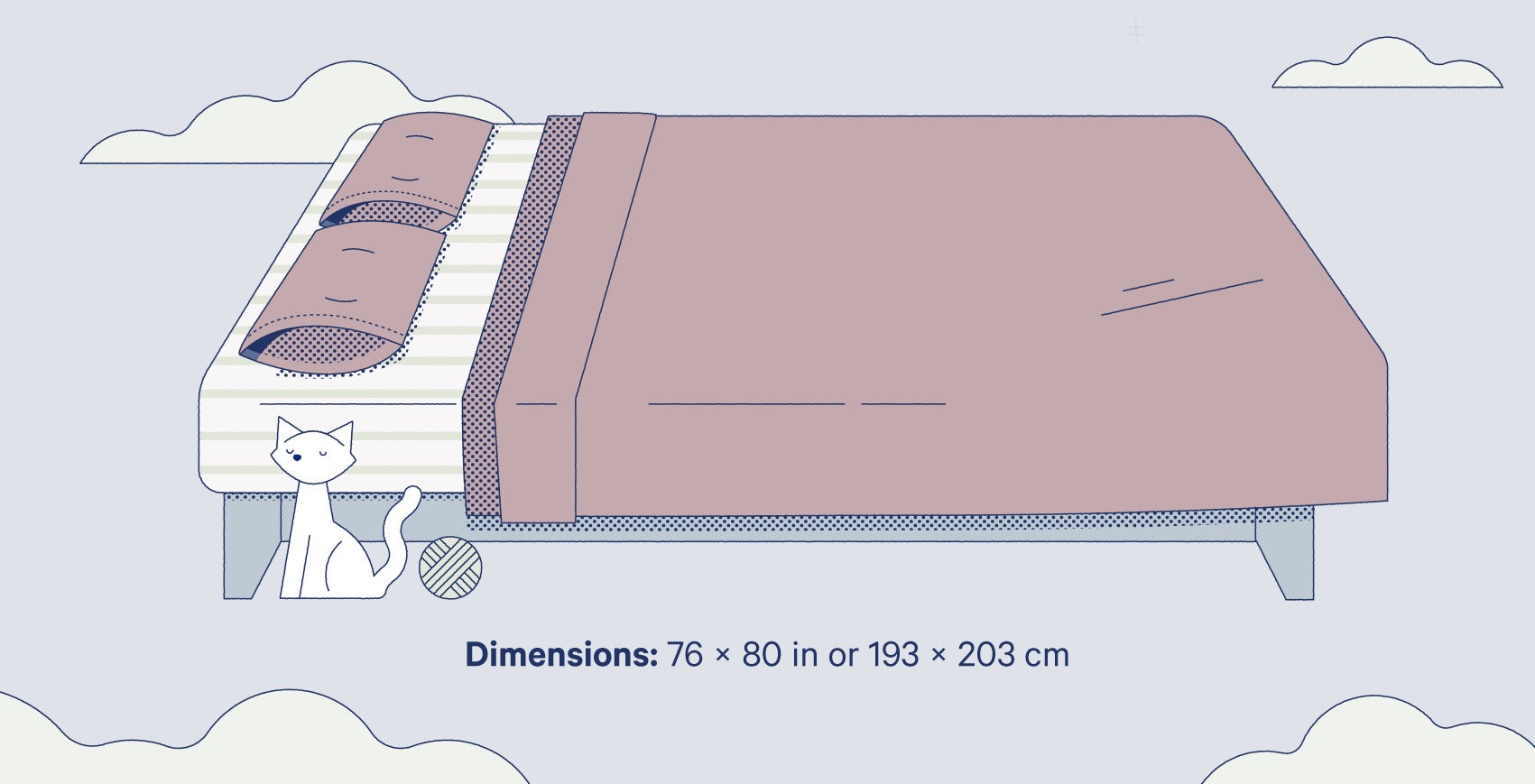
A king mattress measures 76 inches wide by 80 inches long. Each sleeper in a couple gets 38 inches of personal space — wider than a full twin mattress. That extra room matters when children wander in at 2 a.m., when a large dog claims a corner, or when one partner is a restless sleeper and the other is a light one. A King is also the right choice if you work from a laptop in bed regularly and want to spread out without elbowing your partner.
One technical note: a King is made from materials in two sections, which is why a standard box spring kit ships as two Twin XL pieces. Two Twin XL mattresses side by side produce the same dimensions as a King.
Best for: couples who enjoy their sleeping space or share a bed with children.
Minimum room size: 12 x 12 feet.
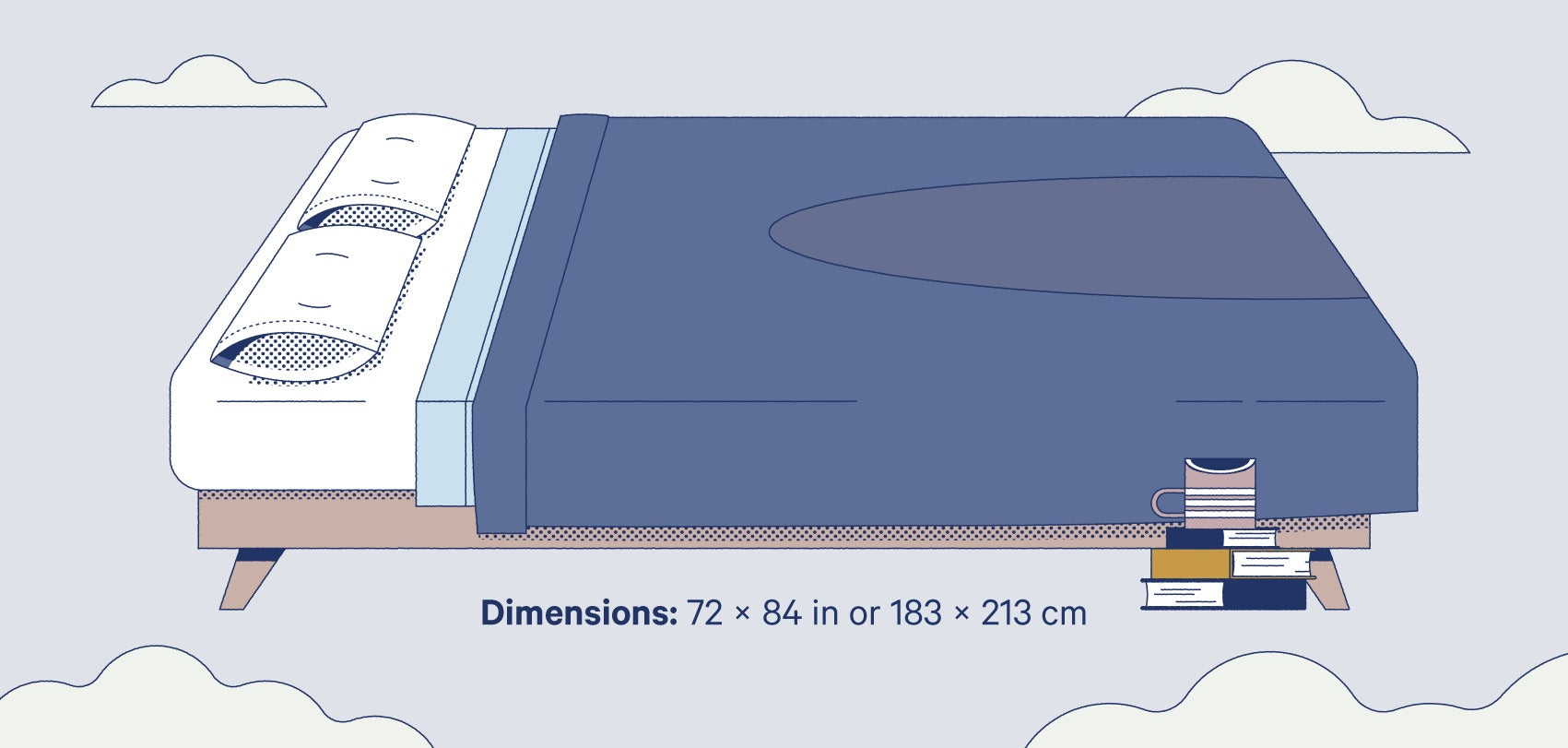
A California king mattress measures 72 inches wide by 84 inches long. It is the longest standard mattress sold in the U.S. — 4 inches longer than a standard King — and the narrowest of the two King options, at 4 inches less width. The trade-off is straightforward: if you or your partner are over 6'2" and legroom is the priority, a California king solves that problem. If shoulder room for two people is the priority, a standard king wins. Total surface area is nearly identical: the California king covers about 41.9 square feet versus 42.2 for a standard king.
Shop California King MattressesBest for: Taller sleepers (especially over 6'2") and couples with kids or four-legged friends who want a luxurious amount of sleeping space.
Minimum room size: 12 x 12 feet.


*Select products ineligible for free shipping or returns where indicated. Additional shipping fees apply to AK and HI.
If it’s time for a new mattress, you may be wondering which size is right for you. There are many factors to consider, like who will be sleeping in the bed, how much space you will need, how much room is in your bedroom, and any specific health or sleep issues you might face.
Buying a new mattress is not a one-size-fits-all situation, so it’s essential to evaluate your individual needs. If you have a history of back pain or sleep problems, you may want a free trial period to help you make sure you’re comfortable with your new mattress.
Here are some other major factors you will want to consider when choosing a mattress.
Will you be sharing the bed with a partner? Do your children or dogs typically sleep with you? These are questions to ask yourself before deciding on mattress size. Typically twin, twin XL, and full mattresses are meant for one person. On the other hand, queen, king, and California king beds are a good bed size for couples and any children or pets that wander into the bed in the middle of the night.
If you are going to sleep with another person, consider how close you like to sleep. If you both enjoy stretching out when sleeping, the extra room afforded by a king or California king size will be appreciated—and help you avoid any accidental thwacks if your partner rolls over in their sleep.
The amount of space available to you should also be considered. A larger mattress will take up more space in your bedroom, as will any other bedroom furniture, so you will need to plan accordingly.
To help you decide if there is ample space for the mattress you’re considering for your room, here is a bed size dimensions chart in square inches and square feet:
You should take your height and width into consideration when choosing a mattress. A typical twin mattress is 75 inches long, while a twin XL is 80 inches long. If an individual is taller than six feet two inches, a twin mattress is probably not for them. Instead, it’s best to go with the XL, full, queen, or king bed, all of which can accommodate someone who is up to 6 feet 7 inches.
Those that are taller than 7 feet should opt for a California king bed. For those who want more space on either side of their body, a full, queen, or king bed will be the most comfortable.
When narrowing down your mattress size choices, consider how much space you’ll need to comfortably move around while you sleep. Do you toss and turn like a cowboy riding a bronco, or do you more closely resemble a hibernating bear who doesn’t move once you close your eyes?
You could be a side sleeper, a back sleeper, a stomach sleeper, or a combination of the three—most people are. If you know you do a lot of sleep-riddled moving and grooving as you sleep, a wider mattress might be a better choice for you.
The amount of money you are willing to spend on a mattress can also help you choose the right size. A king will cost more than a queen size, and a queen more than a full, etc. Buying a mattress that meets both your size needs and your financial needs is key.
Of course, there are other factors that determine the price of a mattress, including:
Materials – The materials that manufacturers use to make their beds play a big role in deciding the final price of a mattress. For example, innerspring and all-foam mattresses are a more cost-effective option if you’re on a budget. In contrast, latex and hybrid beds use more high-end materials and can cost twice as much but are more durable and provide ample comfort and support.
How you buy it – Nowadays, when it comes to shopping, many people prefer to make their purchases online. However, mattresses are often the exception to the rule because it’s helpful to get a real feel for the bed before you commit to purchasing it.
That said, there are also real advantages to shopping online. According to the Sleep Foundation, some brick-and-mortar stores actually mark up the cost of their mattresses by up to 900% (Sleep Foundation). In contrast, online retailers have less overhead costs and can often sell their products at a more affordable rate, saving you some valuable dollars in the process.
While six traditional mattress sizes may feel like plenty of options to choose from, sometimes you want something a little less traditional.
Perhaps you have very distinct personal preferences. Maybe the size and shape of the room you’re decorating requires something more unique.
Whatever the reason, there are numerous lesser-known mattresses (aka specialty sizes) available. From the “small single” to the gargantuan “Alaskan King,” here are some of the specialty mattress sizes and their bed size dimensions:
Choosing the right size is about more than “will it fit?”—it’s about daily comfort, clean lines in your space, and a smooth delivery day. Here are the easy-to-miss pitfalls and how to avoid them:
Avoiding these mistakes will help ensure that the mattress size chosen fits well physically, comfortably, and financially for your needs and space.
Finding the perfect mattress isn’t as easy as picking a new button-down for an upcoming date night. Like any relationship, it takes time, patience, and an understanding of what you want to find the one.
Whether you ultimately decide on a full-size, a king-size, or something in between, Casper is here to provide you with a mattress you’ll love just as much in five years as you do the day you bring it home.
You can choose from a variety of high-quality mattresses available in sizes ranging from twin to California King to fit your room no matter its dimensions.
Browse our collection to find your perfect match today.
There are six standard mattress sizes in the United States: Twin (38" × 75"), Twin XL (38" × 80"), Full/Double (53" × 75"), Queen (60" × 80"), King (76" × 80"), and California King (72" × 84"). Of those, the Queen is the most widely purchased, followed by the King.
A single mattress and a twin mattress are one and the same — both have the dimensions of 38 inches by 75 inches. These, along with the twin XL (which is a little longer), are designed to fit one person.
The term “twin” came about because these mattresses were often placed two to a room, either in children’s rooms, hotels, or other rooms that are meant to be shared by more than one person.
Yes, several mattress sizes are smaller than a standard twin, including crib mattresses (28 x 52 inches) for infants, small single mattresses (30 x 75 inches) for children or tight spaces, and youth or junior beds (33 x 66 inches) as a transitional size. Additionally, special smaller sizes like those for RVs can be found.
Although a twin XL is 15 inches narrower than a full, it’s 5 inches longer. Twin XL beds usually can’t comfortably accommodate more than one person, but they are an ideal choice for a single sleeper that’s too tall for a traditional size bed. Twin XL beds are great for small, narrow bedrooms where there’s not a lot of floor space, and are often the bed of choice for college dorm rooms and apartments.

Our Comparable Value prices reflect the price at which we or third parties have offered this item or a comparable item.
 How does Casper create the best value products for their sleepers?
Our team regularly searches the market and tests comparable mattress and sleep products to ensure that ours offer top-quality materials, the most value for your dollar, and the best sleep experience on the market.
 Every Casper mattress is designed and assembled in the USA.
As part of the Carpenter Co family, Casper mattresses are manufactured by the largest foam manufacturer in the world—no middle man, no markups, just the best prices for our sleepers.
 We don’t rely on gimmicks—just 12+ years of expertise.
With 12+ years in the mattress and bedding industry, the Casper team knows what makes a great night’s rest and what’s just fluff. Our mattresses and bedding are obsessively-engineered and precisely-layered to help you get your deepest sleep ever.
 We don’t sleep on getting you the best possible deal.
The Comp. Value shown for Casper products is never set it and forget it. Our team conducts thorough market research every quarter to ensure our comparable value is always accurate to the bedding market and the three most comparable products, so you never have to worry about missing out on savings.