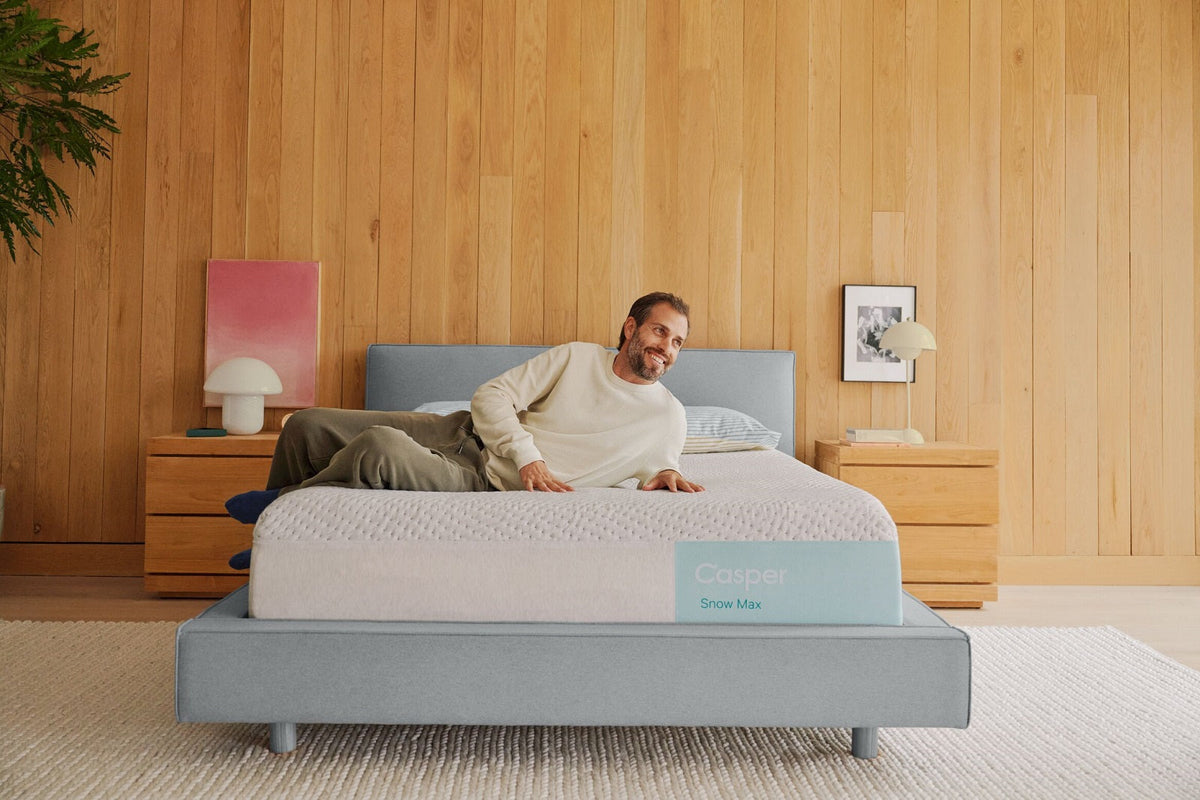
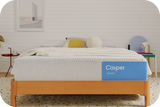
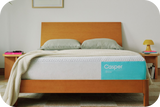
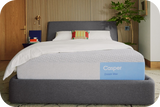
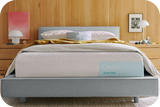
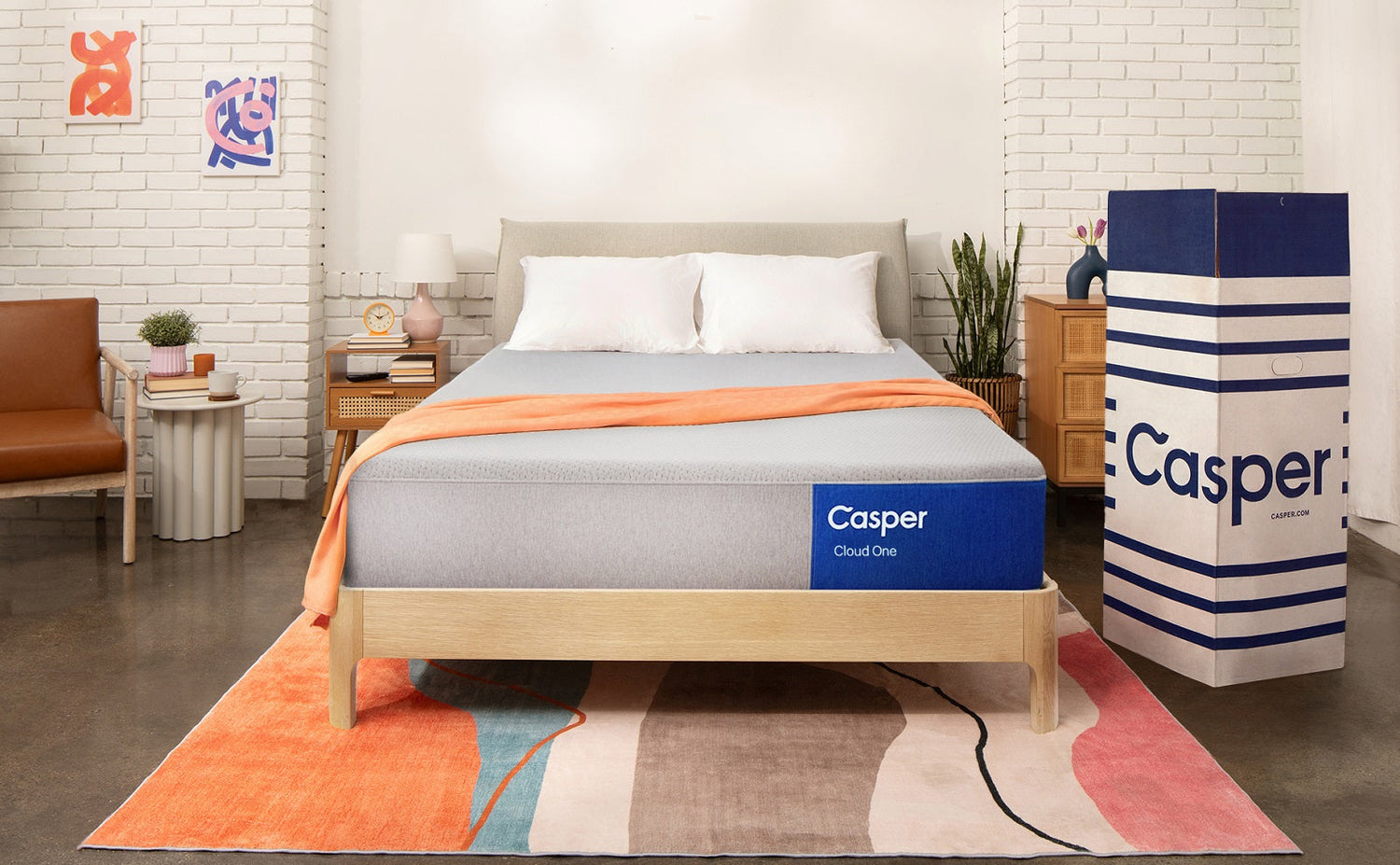
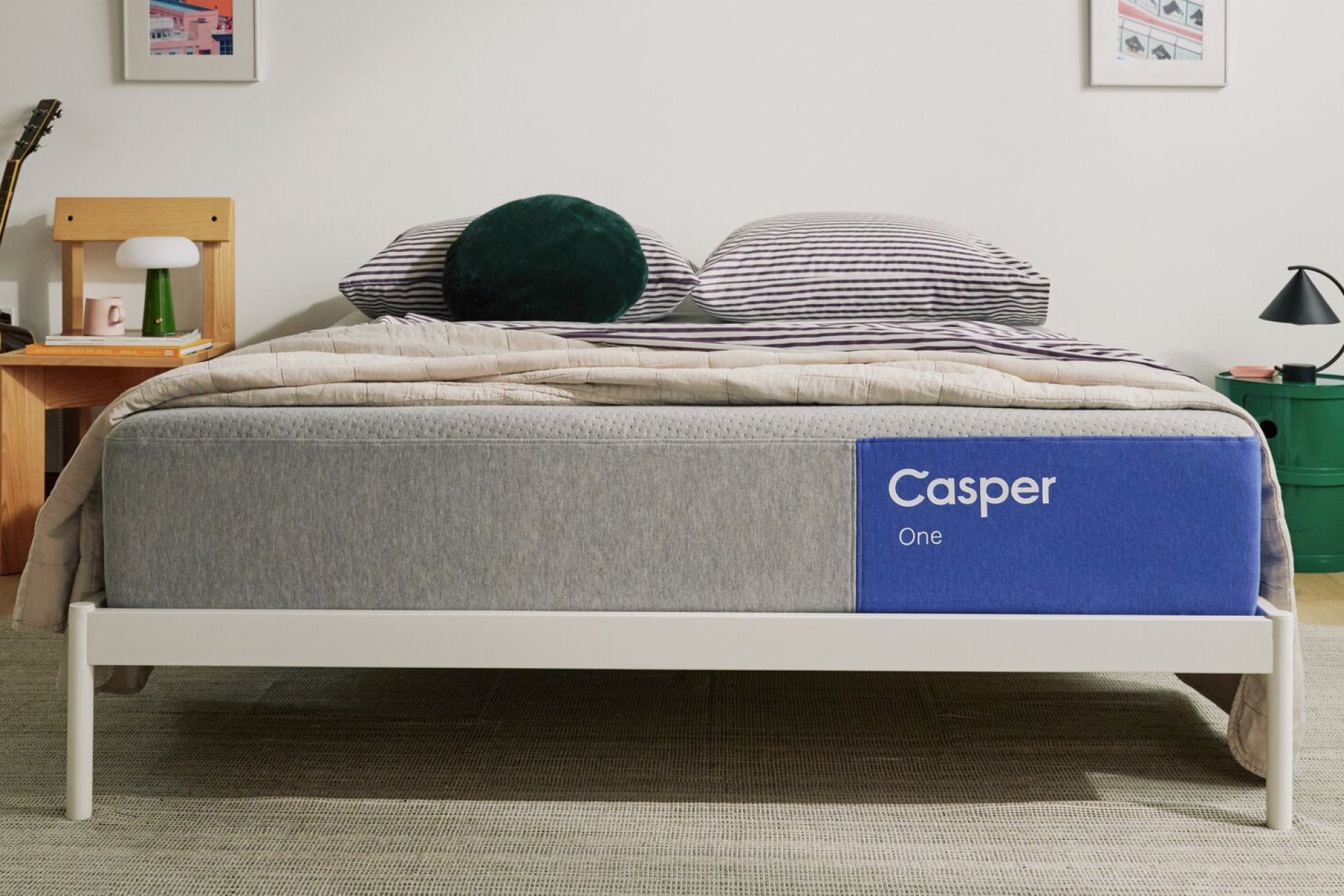



Choosing between the Casper One and Cloud One is simple: do you prefer to sleep "on" your mattress or to sink "in" to it?
Both are 11-inch all-foam mattresses that share the same breathable top layers, but they diverge in terms of firmness, edge support, and how they cradle your body night after night. We'll break down the construction differences, cooling performance, and who each mattress suits best. Plus, with Casper's 100-night trial and 10-year warranty, you can test either option risk-free in your own bedroom.
Main Takeaway
The Casper One delivers medium-firm, "on-top" support, while the Cloud One offers a plusher, "sink-in" medium-soft feel with Core+ technology and enhanced edge support. Since adults need 7 hours each day of quality sleep, the key difference comes down to sleeping preference.1
Firmness & Feel
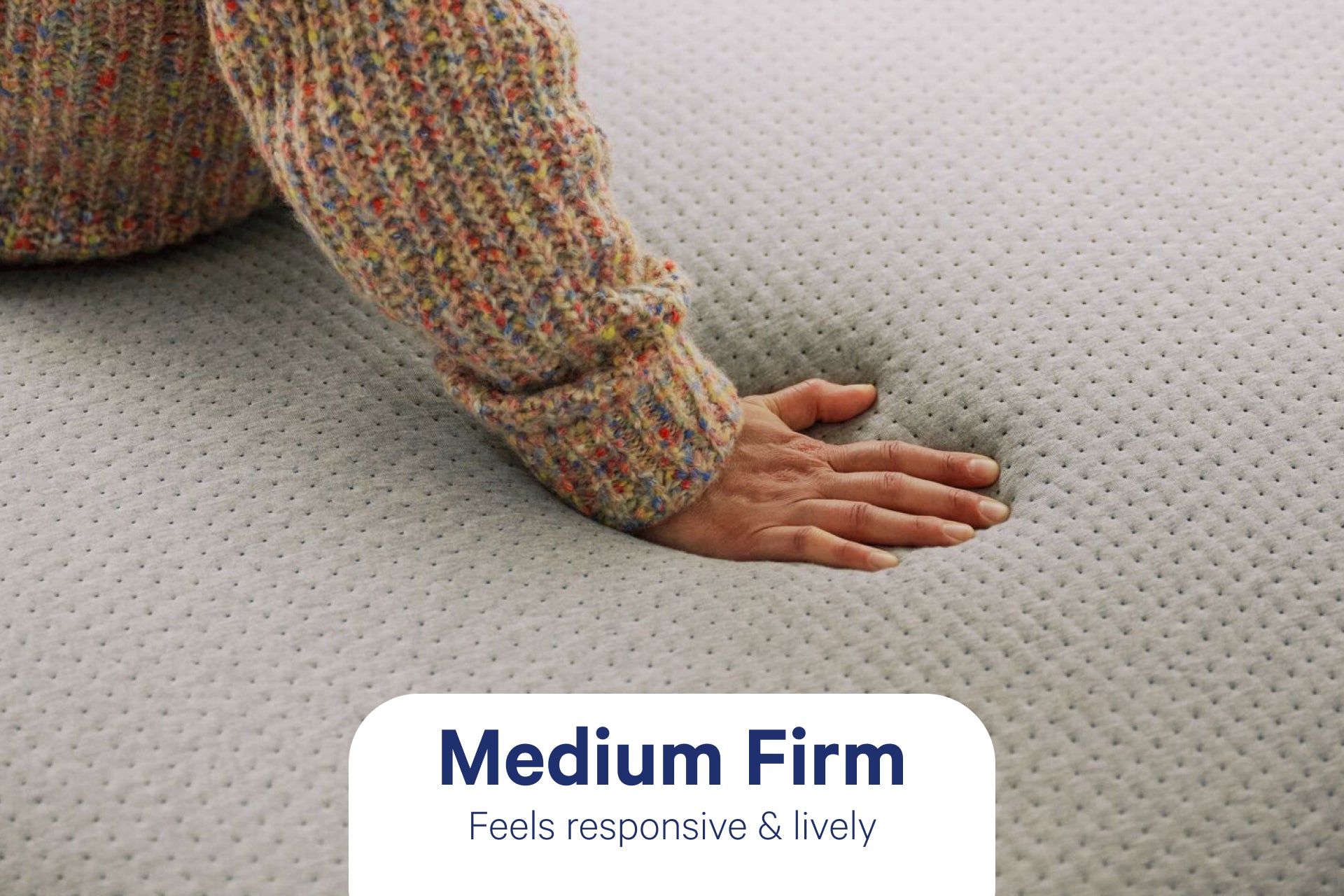
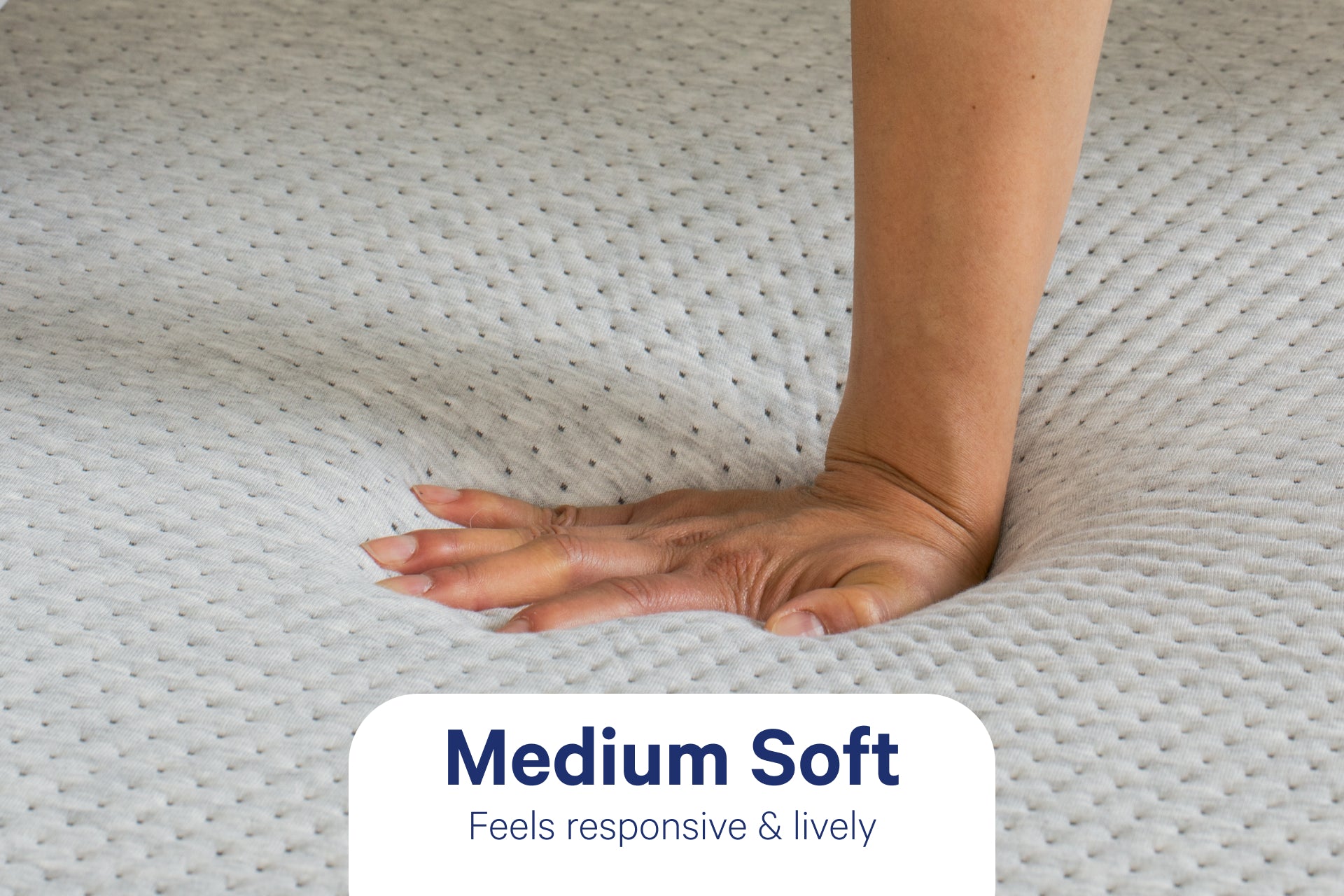
The Casper One has a medium-firm feel that keeps you elevated, while the Cloud One offers a medium-soft, plush hug that still provides support. Research shows that mattress firmness directly impacts sleep latency, helping people fall asleep faster on medium-firm surfaces.2
Your body weight and sleep position will influence how each mattress feels.
Casper One
The Casper One provides medium-firm support with even pressure distribution. Its minimal sink keeps your spine aligned, making this responsive feel ideal if you’re a back sleeper or a stomach sleeper who wants contouring without deep sinkage.
Casper Cloud One
The Cloud One offers a medium-soft feel with deeper compression from its Core+ pillars. This creates a "sleeping in the mattress" sensation for side and combination sleepers, providing softer, targeted pressure relief.

Construction: What's Shared
Both are 11-inch, three-layer foam mattresses. Each features a breathable comfort layer on top and a supportive memory foam layer beneath it, creating consistent airflow and pressure relief while delivering the signature Casper mattress feel.
Top Layer: Breathe Flex Foam
Breathe Flex Foam is an open-cell polyfoam designed to promote airflow at the surface of the mattress. By allowing warm air to move away from your body, it helps maintain a cooler, more breathable sleep environment. The material also adds gentle responsiveness, giving the surface enough bounce to make changing positions feel easy rather than restrictive.
Middle Layer: Align Memory Foam
Align Memory Foam sits between the top Breathe Flex Foam (for breathability and bounce) and the firm Casper Core or Core+ base (for durability and anti-sagging). It uses premium memory foam that conforms without excessive sinking, enhancing airflow and comfort. Inspired by the performance of the Casper Original, it helps accommodate a range of sleeping positions while maintaining consistent alignment.
Whether you’re upgrading to a new mattress or comparing options, these are mattresses that offer breathable comfort on top, thoughtful support beneath, and a more stable, restful sleep experience overall.
Core Technology: What's Different
The support core is where these mattresses truly diverge. The Casper One uses solid polyurethane foam, while the Casper Cloud One features patent-pending Core+™ pillar technology, creating each mattress’s unique feel and performance.
Sleepers will find that these distinct support systems influence how the bed responds to movement and weight distribution. Research suggests that certain support designs can help reduce muscle engagement during sleep, supporting relaxation and recovery.3
Casper One: Casper Core
The One’s base is dense, uniform polyurethane foam that provides consistent lift and long-term durability. This solid foundation supports an “on-top” sleep feel and helps prevent excessive sagging over time.
Cloud One: Casper Core+™
Core+™ technology uses individual foam pillars that compress independently, similar to coils in a hybrid mattress. This design delivers deeper pressure relief and enhanced responsiveness, while airflow channels between pillars help heat move through the mattress more efficiently.
Edge Support
Edge support measures how well a mattress holds up at the perimeter. The Cloud One includes reinforced foam rails, while the One relies on standard base foam. Stronger edges provide:
- Better usable surface: More sleeping space
- Easier entry and exit: More stability getting in and out of bed
- Sitting support: The edge resists compression when sitting

Cooling & Breathability
Both mattresses use open-cell foams to help limit heat buildup, since elevated temperatures can disrupt sleep quality.4 The Cloud One’s pillar-based core adds airflow channels that may further support heat dissipation. For even cooler sleep, pair either mattress with breathable bed sheets.
Specs & Handling
Both mattresses stand 11 inches tall and feature an all-foam construction designed for straightforward delivery and setup. Each ships compressed in a box and expands once unwrapped, making it easy to move through hallways, doorways, and staircases before installation.
Thanks to differences in their support cores, the Cloud One is lighter and more flexible to maneuver than the Casper One, whose solid polyfoam base gives it a denser, more substantial feel. This can make the Cloud One slightly easier to rotate or reposition during setup or routine maintenance, while the One’s sturdier core contributes to its more stable, grounded sleep surface.
You can sleep on either mattress the same night it’s unboxed, though full expansion may take up to 48 hours. As with most foam mattresses, rotating periodically (rather than flipping) helps maintain even wear over time.
Who Should Choose Which?
Your sleep style, body weight, and preference for an "on" vs. "in" feel should guide your decision. Consider if you share the bed and need strong motion isolation or edge support, , perhaps during a Memorial Day mattress sale when upgrading your bedroom. Complete your setup with pillows tailored to your sleep position.
Choose Casper One If…
- You prefer responsive, medium-firm support: For an elevated feel with balanced contouring
- You're a back or stomach sleeper: Helps prevent midsection sink for better spinal alignment, an important factor when choosing the best mattress for stomach sleepers
- You want proven value: Signature zoned support and cooling at a great price
Choose Cloud One If…
- You like plusher, medium comfort: Core+ pillars deliver deeper pressure relief
- You're a side sleeper or couple: Offers enhanced edge support and targeted cushioning, making it a strong option for the best mattress for side sleepers
- You want maximum usable surface: A reinforced perimeter keeps the bed stable
Warranty, Trial, & Shipping
Both mattresses include a 10-year limited warranty and a 100-night risk-free trial with a 30-night adjustment period, an important consideration when deciding how much you should spend on a mattress. If you’re not satisfied after the break-in period, we offer free pickup and a full refund.
Availability & Setup
Both mattresses ship compressed in a box and expand when unwrapped. You can sleep on either the same night, though full expansion may take 48 hours. Order online or visit our stores to try them in person before deciding.
Find Your Next Best Sleep, with Casper
The One offers medium-firm support for back and stomach sleepers, while the Cloud One gives medium-plush comfort to side sleepers and couples. With a risk-free trial and 10-year warranty, you can choose confidently. Explore the complete mattress collection to find your perfect Casper sleep.
Sources:
- Centers for Disease Control and Prevention. FastStats: Sleep in Adults. https://www.cdc.gov/sleep/data-research/facts-stats/adults-sleep-facts-and-stats.html
- National Center for Biotechnology Information. The Effect of Mattress Firmness on Sleep Architecture and PSG Characteristics. https://pmc.ncbi.nlm.nih.gov/articles/PMC12071755/
- BioMed Central. Cross-sectional study of different mattresses, lumbar back muscle activity, and autonomic nervous system function. https://sleep.biomedcentral.com/articles/10.1186/s41606-024-00118-3
- PubMed. A systematic review of ambient heat and sleep in a warming climate. https://pubmed.ncbi.nlm.nih.gov/38598988/